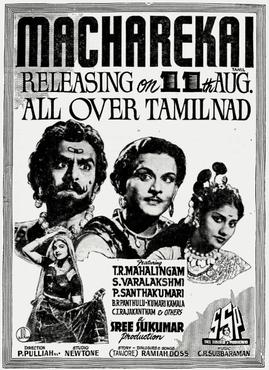
Androru Naal Unthan Lyrics
From the movie Macha Rekai - 1950
Androru Naal Unthan Song Lyrics is the track from Macha Rekai - 1950 Tamil Film – 1950. This song was sung by டி. ஆர். மஹாலிங்கம். The music was composed by C. R. Subbaraman. Lyrics works penned by Thanjai N. Ramaiya Dass.
Track Credits & Star Cast
Music & Lyrics
Singers
Star Cast
Not Specified
Androru naal undhan Arunjilaiyin baliyaaga
Kondridavae ennai manam thunindhaar Thandhirathaal seidha sathiyai
Thadutha en thaai unnarulaal Sindhai magizhdhen seiyaen naan
Neeyae thunai seiguvaai Amma jagathambha
Maayae un padham Arulvaayae parasakthi
Neeyae thunai seiguvaai Amma jagathambha
Maayae un padham Arulvaayae parasakthi
Thaaithanai kaana thavikkindren Pettra enai pettra
Thaaithanai kaana thavikkindren Tharanithanilae thavikkindren
Dharma thaayae thayai seiguvaai
Neeyae thunai seiguvaai Amma jagathambha
Maayae un padham Arulvaayae parasakthi
Song Meaning & Analysis
This devotional song from 'Macha Rekai - 1950' is a heartfelt prayer to the Divine Mother, personified as Amba, Jagadamba, and Parasakthi. The singer recounts a past ordeal where he was nearly sacrificed before a sacred idol, a conspiracy thwarted by his mother's intervention, which he attributes directly to the Goddess's grace. This opening establishes a profound sense of gratitude and unwavering faith in the divine protector, highlighting a miraculous escape from peril.
The narrative then shifts to the present, where the singer expresses deep anguish and a desperate yearning to reunite with his mother, suggesting a current state of separation or loss. He feels distressed and lost on earth, turning to the Goddess as his sole refuge and support. The repeated plea, "You alone shall be my support," underscores his complete surrender and reliance on her mercy, portraying her as the ultimate "Mother of Dharma" who can alleviate his suffering and guide him through his trials.
Frequently Asked Questions
Who is the singer of Androru Naal Unthan?
Androru Naal Unthan is sung by டி. ஆர். மஹாலிங்கம்.
Which movie is Androru Naal Unthan from?
The song Androru Naal Unthan is featured in the movie Macha Rekai - 1950.
Who wrote the lyrics for Androru Naal Unthan?
The lyrics for Androru Naal Unthan were written by Thanjai N. Ramaiya Dass with music composed by C. R. Subbaraman.
Is English translation available for Androru Naal Unthan lyrics?
Yes! Androru Naal Unthan lyrics from Macha Rekai - 1950 include line-by-line English translation, English transliteration, and native Tamil script on Lyricsverse.
What is the meaning of Androru Naal Unthan lyrics?
This devotional song from 'Macha Rekai - 1950' is a heartfelt prayer to the Divine Mother, personified as Amba, Jagadamba, and Parasakthi. The singer recounts a past ordeal where he was nearly sacrificed before a sacred idol, a conspiracy thwarted by his mother's intervention, which he attributes directly to the Goddess's grace. This opening establishes a profound sense of gratitude and unwavering faith in the divine protector, highlighting a miraculous escape from peril. The narrative then shifts to the present, where the singer expresses deep anguish and a desperate yearning to reunite with his mother, suggesting a current state of separation or loss. He feels distressed and lost on earth, turning to the Goddess as his sole refuge and support. The repeated plea, "You alone shall be my support," underscores his complete surrender and reliance on her mercy, portraying her as the ultimate "Mother of Dharma" who can alleviate his suffering and guide him through his trials.
Song Details
More from Macha Rekai - 1950
Andho Puvimel
Macha Rekai - 1950 • C. R. Subbaraman
டி. ஆர். மஹாலிங்கம்
Devi Jeganmatha
Macha Rekai - 1950 • C. R. Subbaraman
டி. ஆர். மஹாலிங்கம்
Ellam Irunthenna
Macha Rekai - 1950 • C. R. Subbaraman
டி. ஆர். மஹாலிங்கம் மற்றும் எஸ். விரலட்சுமி
Kalai Maanai Pola
Macha Rekai - 1950 • C. R. Subbaraman
டி. ஆர். மஹாலிங்கம்
Kanavilum Unnai
Macha Rekai - 1950 • C. R. Subbaraman
டி. ஆர். மஹாலிங்கம் மற்றும் எஸ். விரலட்சுமி
Manam Magizhave
Macha Rekai - 1950 • C. R. Subbaraman
ஏ. பி. கோமளா