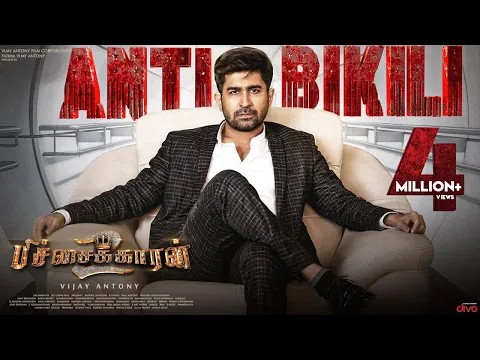
Anti Bikili Lyrics
From the movie Pichaikkaran 2
Anti Bikili Song Lyrics is the track from Pichaikkaran 2 Tamil Film – 2020. This song was sung by ஷெண்பகராஜ், சரத் சந்தோஷ். The music was composed by Vijay Antony. Lyrics works penned by Vijay Antony.
Track Credits & Star Cast
Music & Lyrics
Singers
Star Cast
Not Specified
Saisharan, Narayanan and Vignesh Narayanan
Poo poo Nee panna pora punniyam
Nee thedurathu unakku kudukkum
Om bhur bhuvah swaha tat savitur varenyam
All : Pichaikkaran Pichaikkaran
Pichaikkaran Pichaikkaran
All : Vettava kuhthava vettava kuththava
Vettava kuhthava vettava kuththava
All : Kadagada kadagada kadagada vena Kasu eduthu kottava
Kudisai serikellaam maadi veedu kattava
All : Dharma samstha panarthaya Sambhavaami yughe yughe
Dharma samstha panarthaya Sambhavaami yughe yughe
Pichaikkaran Pichaikkaran
Pichaikkaran Pichaikkaran
All : Om bhur bhuvah swaha tat savitur varenyam
Bhargho devasya dhimahi dhiyo yo nah prachodayateh
Pichaikkaran Pichaikkaran
Pichaikkaran Pichaikkaran
Song Meaning & Analysis
The song "Anti Bikili" from 'Pichaikkaran 2' is a powerful anthem reflecting the protagonist's transformation and mission. It opens with a call to action, suggesting that good deeds will yield desired outcomes, setting a tone of righteous purpose. The repeated chant of "Pichaikkaran" (Beggar) by the chorus, juxtaposed with aggressive lines like "Shall I cut? Shall I stab?", highlights the character's dual nature: a former beggar now empowered and ready to fight for justice. The inclusion of sacred Sanskrit verses, particularly from the Gayatri Mantra and Bhagavad Gita, elevates the protagonist's struggle to a spiritual crusade, implying a divine mandate for his actions.
The lyrics vividly portray the protagonist's commitment to social upliftment, promising to distribute wealth ("Shall I take the money and pour it?") and build homes for the underprivileged ("Shall I build multi-storied houses for all the slum dwellers?"). The recurring phrase "Dharma Samstha Panarthaya, Sambhavami Yuge Yuge" (For the establishment of righteousness, I manifest myself age after age) directly echoes Lord Krishna's promise to restore Dharma, positioning the beggar-turned-savior as a modern-day avatar fighting against injustice and inequality. The song encapsulates themes of revolution, wealth redistribution, and the establishment of a just society, driven by a fierce, almost divine, resolve.
Frequently Asked Questions
Who is the singer of Anti Bikili?
Anti Bikili is sung by ஷெண்பகராஜ், சரத் சந்தோஷ்.
Which movie is Anti Bikili from?
The song Anti Bikili is featured in the movie Pichaikkaran 2.
Who wrote the lyrics for Anti Bikili?
The lyrics for Anti Bikili were written by Vijay Antony with music composed by Vijay Antony.
Is English translation available for Anti Bikili lyrics?
Yes! Anti Bikili lyrics from Pichaikkaran 2 include line-by-line English translation, English transliteration, and native Tamil script on Lyricsverse.
What is the meaning of Anti Bikili lyrics?
The song "Anti Bikili" from 'Pichaikkaran 2' is a powerful anthem reflecting the protagonist's transformation and mission. It opens with a call to action, suggesting that good deeds will yield desired outcomes, setting a tone of righteous purpose. The repeated chant of "Pichaikkaran" (Beggar) by the chorus, juxtaposed with aggressive lines like "Shall I cut? Shall I stab?", highlights the character's dual nature: a former beggar now empowered and ready to fight for justice. The inclusion of sacred Sanskrit verses, particularly from the Gayatri Mantra and Bhagavad Gita, elevates the protagonist's struggle to a spiritual crusade, implying a divine mandate for his actions. The lyrics vividly portray the protagonist's commitment to social upliftment, promising to distribute wealth ("Shall I take the money and pour it?") and build homes for the underprivileged ("Shall I build multi-storied houses for all the slum dwellers?"). The recurring phrase "Dharma Samstha Panarthaya, Sambhavami Yuge Yuge" (For the establishment of righteousness, I manifest myself age after age) directly echoes Lord Krishna's promise to restore Dharma, positioning the beggar-turned-savior as a modern-day avatar fighting against injustice and inequality. The song encapsulates themes of revolution, wealth redistribution, and the establishment of a just society, driven by a fierce, almost divine, resolve.
Music Video
