Deivangal Lyrics
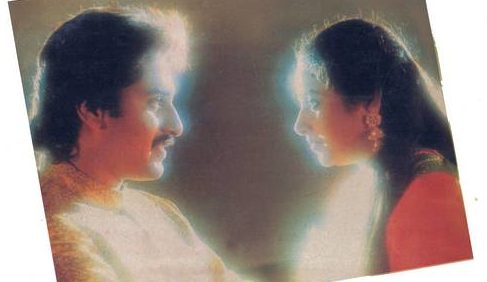
From the movie Pudhiya Raagam
Deivangal Song Lyrics is the track from Pudhiya Raagam Tamil Film – 1991, Starring Jayachitra, Rahman, Raghuvaran, Rupini, Amresh Ganesh, S. S. Chandran, Chinni Jayanth, Varun Raj, Kovai Sarala, C. R. Saraswathi. This song was sung by மனோ மற்றும் எஸ். ஜானகி. The music was composed by Ilayaraja. Lyrics works penned by Vaali.
Track Credits & Star Cast
Singers
Star Cast


Dheivangal kan paarthadhu Thottathil poo poothadhu
Poo ondru saei aanadhu Pen ondru thaai aanadhu
Eer aindhu maadham Thaai konda baaram
Thaalaatta thaanae Kai vandhu serum
Verenna vendum Or pillai vandhaal kollai inbam
Dheivangal kan paarthadhu Thottathil poo poothadhu
Pillai illaadha veedu Mullai illaadha kaadu
Thottil illaadha illam Thendral illadha mandram
Chinna pon vandu Vanna kan rendu
Aagaaya neelam kaattum Kannam poo chendu
Katti karkandu Sendhoora kolam theettum
Maarbodu serthu Mundhaanai moodi
Paaloottum thaayin Aanandham kodi
Verenna vendum Or pillai vandhaal kollai inbam
Poo ondru saei aanadhu Pen ondru thaai aanadhu
Eer aindhu maadham Thaai konda baaram
Thaalaatta thaanae Kai vandhu serum
Verenna vendum Or pillai vandhaal kollai inbam
Poo ondru saei aanadhu Pen ondru thaai aanadhu
Annai endraana pinbu Thunbam munnooru naatkal
Pillai kai vandha pinbu Kannil sandhosha pookkal
Pillai chelvangal Pesum dheivangal
Ellorkkum vaaippadhillai Thaaimai illaadha
Penmai ennaalum Kaanaadhu anbin ellai
Kai veesi aadum Vaigaasi megam
En veedu sera Naan seidha yogam
Verenna vendum Or pillai vandhaal kollai inbam
Dheivangal kan paarthadhu Thottathil poo poothadhu
Poo ondru saei aanadhu Pen ondru thaai aanadhu
Eer aindhu maadham Thaai konda baaram
Thaalaatta thaanae Kai vandhu serum
Verenna vendum Or pillai vandhaal kollai inbam
Dheivangal kan paarthadhu Thottathil poo poothadhu
Song Meaning & Analysis
This song beautifully encapsulates the profound joy and fulfillment that childbirth brings to a woman and a family. It metaphorically describes the arrival of a child as a divine blessing, where "Gods cast their gaze" and a "flower bloomed in the garden" transforming into a child, and a woman into a mother. The lyrics tenderly portray the anticipation and the physical burden of pregnancy over "ten months," emphasizing that all the hardships are forgotten the moment the child is held. It highlights the emptiness of a home without a child, comparing it to a barren forest or a lifeless hall, underscoring the child's role as the ultimate source of warmth, happiness, and completeness.
The song further celebrates the child as a "tiny golden beetle" with "colorful eyes," whose presence paints life with vibrant hues and brings immeasurable happiness. It speaks of the unparalleled bliss of a mother breastfeeding her child, a joy that surpasses all other desires. The lyrics acknowledge the initial "three hundred days of sorrow" (pregnancy discomforts) that transform into "flowers of happiness" in the mother's eyes once the child arrives. Ultimately, it elevates children to the status of "speaking gods" and "treasures," a blessing not everyone receives, suggesting that true womanhood finds its deepest expression and understanding of boundless love through motherhood. The arrival of a child is depicted as a great fortune, making life complete.
Frequently Asked Questions
Who is the singer of Deivangal?
Deivangal is sung by மனோ மற்றும் எஸ். ஜானகி.
Which movie is Deivangal from?
The song Deivangal is featured in the movie Pudhiya Raagam.
Who wrote the lyrics for Deivangal?
The lyrics for Deivangal were written by Vaali with music composed by Ilayaraja.
Is English translation available for Deivangal lyrics?
Yes! Deivangal lyrics from Pudhiya Raagam include line-by-line English translation, English transliteration, and native Tamil script on Lyricsverse.
What is the meaning of Deivangal lyrics?
This song beautifully encapsulates the profound joy and fulfillment that childbirth brings to a woman and a family. It metaphorically describes the arrival of a child as a divine blessing, where "Gods cast their gaze" and a "flower bloomed in the garden" transforming into a child, and a woman into a mother. The lyrics tenderly portray the anticipation and the physical burden of pregnancy over "ten months," emphasizing that all the hardships are forgotten the moment the child is held. It highlights the emptiness of a home without a child, comparing it to a barren forest or a lifeless hall, underscoring the child's role as the ultimate source of warmth, happiness, and completeness. The song further celebrates the child as a "tiny golden beetle" with "colorful eyes," whose presence paints life with vibrant hues and brings immeasurable happiness. It speaks of the unparalleled bliss of a mother breastfeeding her child, a joy that surpasses all other desires. The lyrics acknowledge the initial "three hundred days of sorrow" (pregnancy discomforts) that transform into "flowers of happiness" in the mother's eyes once the child arrives. Ultimately, it elevates children to the status of "speaking gods" and "treasures," a blessing not everyone receives, suggesting that true womanhood finds its deepest expression and understanding of boundless love through motherhood. The arrival of a child is depicted as a great fortune, making life complete.