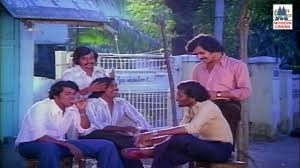
Engal Kathai Lyrics
From the movie Palaivana Solai
Engal Kathai Song Lyrics is the track from Palaivana Solai Tamil Film – 1981, Starring Suhasini Maniratnam, Vagai Chandrasekar, Janagaraj, Rajeev, Kailas Nath, Thiyagu, Kalaivani. This song was sung by எஸ். பி. பாலசுப்ரமணியம். The music was composed by Sankar Ganesh. Lyrics works penned by Vairamuthu.
Track Credits & Star Cast
Music & Lyrics
Singers
Star Cast


Engal kadhai idhu ungalin kadhai Engal kadhai idhu ungalin kadhai
Saalai engal paadasaalai Velai thaedal engal velai hoo vaalibamae
Tea kadaiyae aalaiyamae
Engal kadhai idhu ungalin kadhai Haa haa aaa aa
Engal kadhai idhu ungalin kadhai
Naangal vidum pugaimandalam Megangalaai aagathoo
Oru pattam vaanginom adhil pattam vidugirom
Pudhu sattam idugirom paarungal
Engal kadhai idhu ungalin kadhai Engal kadhai idhu ungalin kadhai
Azhuvadhum vizhuvadhum Ezhuvadhum thozhuvadhum
Pazhaiyavar parambaraigal Irupathai edupathum
Siripathum kodupathuum Pudhu yuga varamuraigal
Singangalae serungalaen Singangalae serungalaen
Kanavin nuraigal vadiyattumae
Engal kadhai idhu ungalin kadhai Engal kadhai idhu ungalin kadhai
Ponnulagin maaligai thirakkum Poongaatru neendhi varum
Poomaalai vaangi varum Dhesam engum aadungal
Raajaraagam paadungal Eduppom sabatham mudippom
Engal kadhai idhu ungalin kadhai Engal kadhai idhu ungalin kadhai
Saalai engal paadasaalai Velai thaedal engal velai hoo vaalibamae
Tea kadaiyae aalaiyamae
Song Meaning & Analysis
This song, 'Engal Kathai' from the 1981 film 'Palaivana Solai', is an anthem for the youth, reflecting their struggles, aspirations, and a subtle rebellion against societal norms. Penned by Vairamuthu, it captures the essence of a generation grappling with unemployment and the disillusionment of education not leading to immediate opportunities. The lyrics poignantly declare that their everyday lives – the roads they walk, the tea shops they frequent – have become their unconventional schools and temples, highlighting a shift in their perception of traditional institutions and a reliance on their own experiences for learning and solace.
The song's mood is one of defiant hope and youthful energy. It speaks of breaking old traditions ('crying and falling, rising and praying') and establishing new ones ('taking what exists, smiling and giving'). The metaphor of flying kites with their degrees symbolizes the underutilization of their education, yet it's coupled with a powerful call to action: 'We are making new rules, just watch.' The song culminates in a vision of a 'golden world' and a collective oath to fulfill their dreams, urging the 'lions' (youth) to unite and sing their own 'royal melody', signifying a generation ready to carve its own path and bring about change.
Frequently Asked Questions
Who is the singer of Engal Kathai?
Engal Kathai is sung by எஸ். பி. பாலசுப்ரமணியம்.
Which movie is Engal Kathai from?
The song Engal Kathai is featured in the movie Palaivana Solai.
Who wrote the lyrics for Engal Kathai?
The lyrics for Engal Kathai were written by Vairamuthu with music composed by Sankar Ganesh.
Is English translation available for Engal Kathai lyrics?
Yes! Engal Kathai lyrics from Palaivana Solai include line-by-line English translation, English transliteration, and native Tamil script on Lyricsverse.
What is the meaning of Engal Kathai lyrics?
This song, 'Engal Kathai' from the 1981 film 'Palaivana Solai', is an anthem for the youth, reflecting their struggles, aspirations, and a subtle rebellion against societal norms. Penned by Vairamuthu, it captures the essence of a generation grappling with unemployment and the disillusionment of education not leading to immediate opportunities. The lyrics poignantly declare that their everyday lives – the roads they walk, the tea shops they frequent – have become their unconventional schools and temples, highlighting a shift in their perception of traditional institutions and a reliance on their own experiences for learning and solace. The song's mood is one of defiant hope and youthful energy. It speaks of breaking old traditions ('crying and falling, rising and praying') and establishing new ones ('taking what exists, smiling and giving'). The metaphor of flying kites with their degrees symbolizes the underutilization of their education, yet it's coupled with a powerful call to action: 'We are making new rules, just watch.' The song culminates in a vision of a 'golden world' and a collective oath to fulfill their dreams, urging the 'lions' (youth) to unite and sing their own 'royal melody', signifying a generation ready to carve its own path and bring about change.