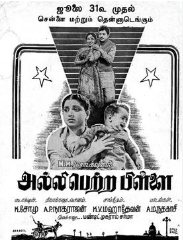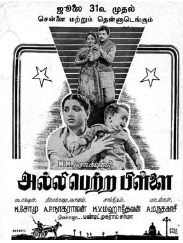
Idhu Theriyum Lyrics
From the movie Alli Petra Pillai
Idhu Theriyum Song Lyrics is the track from Alli Petra Pillai Tamil Film – 1959. This song was sung by டி. எம். சௌந்தரராஜன். The music was composed by K. V. Mahadevan. Lyrics works penned by A. Maruthakasi.
Track Credits & Star Cast
Music & Lyrics
Singers
Star Cast
Not Specified
Singer : T. M. Soundararajan
Arivirukkum anbirukkum Panbirukkum silaridam
Azhagirukkum panamirukkum Pagattirukkum palaridam
Idhu theriyum adhu theriyaathu Idhu theriyum adhu theriyaathu
Idhu theriyum adhu theriyaathu
Yaezhedukkum maaligaiyil irukkira per vazhiga
Eththanaiyo thappu thandaa pannuvaanga
Yaezhai eliyavanga illaatha kaaranaththaal
Yaedho siru thavaru pannuvaanga…
Yaezhedukkum maaligaiyil irukkira per vazhiga
Eththanaiyo thappu thandaa pannuvaanga
Yaezhai eliyavanga illaatha kaaranaththaal
Yaedho siru thavaru pannuvaanga…
Idhu theriyum adhu theriyaathu Idhu theriyum adhu theriyaathu
Jolly mainargal visiri madippinilae Kizhisal oru kodi irukkum
Thozhilaali thuvaichchu uduththum udaiyilae Thaiyal pala odi irukkum
Jolly mainargal visiri madippinilae Kizhisal oru kodi irukkum
Thozhilaali thuvaichchu uduththum udaiyilae Thaiyal pala odi irukkum
Idhu theriyum adhu theriyaathu Idhu theriyum adhu theriyaathu
Kana thanavaanin nenjil ennaalum Kabadam poraamai enum azhukkirukkum
Kana thanavaanin nenjil ennaalum Kabadam poraamai enum azhukkirukkum
Kallam ariyaatha paattaali maeniyil Ullapadi vervai azhukkirukkum
Idhu theriyum adhu theriyaathu Idhu theriyum adhu theriyaathu
Song Meaning & Analysis
The song "Idhu Theriyum" from 'Alli Petra Pillai' is a poignant social commentary that contrasts the perceived virtues and vices of the rich and the poor. It highlights the superficiality often associated with wealth, where outward appearances of beauty and money can mask underlying deceit and envy. The lyrics suggest that while some possess knowledge, love, and culture, many others are characterized by beauty, wealth, and ostentation, implying a moral distinction.
The recurring refrain "This is known, that is not known" underscores a deeper truth: society often judges based on visible attributes, failing to see the hidden complexities or true nature of individuals. The song explicitly contrasts the "many wrongs" committed by the wealthy in their mansions with the "small mistakes" of the poor, born out of necessity. It further illustrates this by comparing the superficial tears in a rich man's fan with the honest stitches in a laborer's worn clothes, and the internal 'dirt' of deceit in the rich with the honest 'dirt' of sweat on a laborer's body, advocating for a more empathetic and nuanced understanding of human character beyond social status.
Frequently Asked Questions
Who is the singer of Idhu Theriyum?
Idhu Theriyum is sung by டி. எம். சௌந்தரராஜன்.
Which movie is Idhu Theriyum from?
The song Idhu Theriyum is featured in the movie Alli Petra Pillai.
Who wrote the lyrics for Idhu Theriyum?
The lyrics for Idhu Theriyum were written by A. Maruthakasi with music composed by K. V. Mahadevan.
Is English translation available for Idhu Theriyum lyrics?
Yes! Idhu Theriyum lyrics from Alli Petra Pillai include line-by-line English translation, English transliteration, and native Tamil script on Lyricsverse.
What is the meaning of Idhu Theriyum lyrics?
The song "Idhu Theriyum" from 'Alli Petra Pillai' is a poignant social commentary that contrasts the perceived virtues and vices of the rich and the poor. It highlights the superficiality often associated with wealth, where outward appearances of beauty and money can mask underlying deceit and envy. The lyrics suggest that while some possess knowledge, love, and culture, many others are characterized by beauty, wealth, and ostentation, implying a moral distinction. The recurring refrain "This is known, that is not known" underscores a deeper truth: society often judges based on visible attributes, failing to see the hidden complexities or true nature of individuals. The song explicitly contrasts the "many wrongs" committed by the wealthy in their mansions with the "small mistakes" of the poor, born out of necessity. It further illustrates this by comparing the superficial tears in a rich man's fan with the honest stitches in a laborer's worn clothes, and the internal 'dirt' of deceit in the rich with the honest 'dirt' of sweat on a laborer's body, advocating for a more empathetic and nuanced understanding of human character beyond social status.