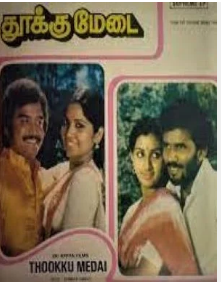
Ini Oru Thollai Lyrics
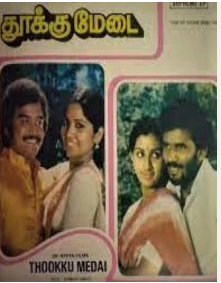
From the movie Thookku Medai
Ini Oru Thollai Song Lyrics is the track from Thookku Medai Tamil Film – 1982. This song was sung by டி. எம். சௌந்தர்ராஜன். The music was composed by Shankar Ganesh. Lyrics works penned by Mahakavi Bharathiyar.
Track Credits & Star Cast
Music & Lyrics
Singers
Star Cast
Not Specified
Iniyoru thollayum illai Pirivillai kuraiyum kavalaiyum illai
Iniyoru thollayum illai Pirivillai kuraiyum kavalaiyum illai
Iniyoru thollayum illai Pirivillai kuraiyum kavalaiyum illai
Kuraiyum kavalaiyum illai
Kani tharum mamaram ondrum adhil Kaaigalum pinju kanigalum undu
Kani tharum mamaram ondrum adhil Kaaigalum pinju kanigalum undu
Manitharil aayiram jaathi endra Vanjaga vaarththaiyai oppuvathillai
Manitharil aayiram jaathi endra Vanjaga vaarththaiyai oppuvathillai
Nanthanai pol oru paarppaan Intha naattinil illai
Nanthanai pol oru paarppaan Intha naattinil illai
Gunam nallathaayin entha kulathinaraenum
Ulaginbam adaithal elithena kandom
Iniyoru thollayum illai Pirivillai kuraiyum kavalaiyum illai
Kuraiyum kavalaiyum illai
Unmaiyin per deivam enbom andri Oodhidm deivangal poiyena kandom
Unmaiyin per deivam enbom andri Oodhidm deivangal poiyena kandom
Nandru puraanangal seithaar Athil nalla kavithai palapala thanthaar
Kavithai miga nallathenum akkathaigal Poiyendru thelivura kandom
Sooththirakkoru neethi thanda Sorunpaarpukku veroru needhi
Saaththiram sollidumaayin Adhu saaththiramandru sathiyendru kandom
Saaththiram sollidumaayin Adhu saaththiramandru sathiyendru kandom
Iniyoru thollayum illai Pirivillai kuraiyum kavalaiyum illai
Iniyoru thollayum illai Pirivillai kuraiyum kavalaiyum illai
Kuraiyum kavalaiyum illai Kuraiyum kavalaiyum illai
Song Meaning & Analysis
This song, based on Mahakavi Bharathiyar's revolutionary poetry, is a profound philosophical and social commentary. It declares a new era free from troubles, separation, and diminishing worries, signifying a liberation from societal ills and mental burdens. Bharathiyar uses the metaphor of a mango tree bearing fruits at various stages to represent the natural diversity of life, contrasting it sharply with the artificial divisions of caste. The lyrics vehemently reject the concept of "a thousand castes among humans," calling it a deceitful notion. It champions the idea that true virtue and character (like that of Nandanar, a Dalit saint) are superior to birth-based status, asserting that good character alone leads to happiness, irrespective of one's lineage.
The song further challenges traditional religious dogma, proclaiming that truth itself is God, and dismissing preached deities as false. While acknowledging the poetic beauty in ancient Puranas, it critically states that their narratives are clearly seen as untrue. The most potent critique comes against the discriminatory justice system, highlighting the injustice of one law for the Shudra and another for the privileged Brahmin. Bharathiyar concludes by stating that any scripture advocating such inequality is not a sacred text but a conspiracy, urging listeners to reject oppressive traditions and embrace a path of truth, equality, and genuine human values. The overall mood is one of defiance, enlightenment, and a call for social reform.
Frequently Asked Questions
Who is the singer of Ini Oru Thollai?
Ini Oru Thollai is sung by டி. எம். சௌந்தர்ராஜன்.
Which movie is Ini Oru Thollai from?
The song Ini Oru Thollai is featured in the movie Thookku Medai.
Who wrote the lyrics for Ini Oru Thollai?
The lyrics for Ini Oru Thollai were written by Mahakavi Bharathiyar with music composed by Shankar Ganesh.
Is English translation available for Ini Oru Thollai lyrics?
Yes! Ini Oru Thollai lyrics from Thookku Medai include line-by-line English translation, English transliteration, and native Tamil script on Lyricsverse.
What is the meaning of Ini Oru Thollai lyrics?
This song, based on Mahakavi Bharathiyar's revolutionary poetry, is a profound philosophical and social commentary. It declares a new era free from troubles, separation, and diminishing worries, signifying a liberation from societal ills and mental burdens. Bharathiyar uses the metaphor of a mango tree bearing fruits at various stages to represent the natural diversity of life, contrasting it sharply with the artificial divisions of caste. The lyrics vehemently reject the concept of "a thousand castes among humans," calling it a deceitful notion. It champions the idea that true virtue and character (like that of Nandanar, a Dalit saint) are superior to birth-based status, asserting that good character alone leads to happiness, irrespective of one's lineage. The song further challenges traditional religious dogma, proclaiming that truth itself is God, and dismissing preached deities as false. While acknowledging the poetic beauty in ancient Puranas, it critically states that their narratives are clearly seen as untrue. The most potent critique comes against the discriminatory justice system, highlighting the injustice of one law for the Shudra and another for the privileged Brahmin. Bharathiyar concludes by stating that any scripture advocating such inequality is not a sacred text but a conspiracy, urging listeners to reject oppressive traditions and embrace a path of truth, equality, and genuine human values. The overall mood is one of defiance, enlightenment, and a call for social reform.