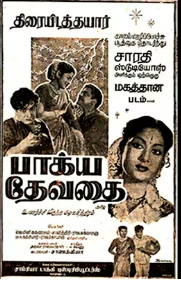
Maathargal Vazhkkai Lyrics
From the movie Bhagya Devathai
Maathargal Vazhkkai Song Lyrics is the track from Bhagya Devathai Tamil Film – 1959. This song was sung by கே. ஜமுனாராணி. The music was composed by Master Venu. Lyrics works penned by Thanjai N. Ramaiah Dass.
Track Credits & Star Cast
Music & Lyrics
Singers
Star Cast
Not Specified
Singer : K. Jamuna Rani
Maatharkal vaazhkkaiyin yanthiramaa Aadavar seitha thanthiramaa
Manathirkisaintha maapillai theduthal Mangaiyar kaanum suyanalamaa
Ila mangaiyar kaanum suyanalamaa
Maatharkal vaazhkkaiyin yanthiramaa Aadavar seitha thanthiramaa
Vaazhkkaiyum orunaal vasanthamum orunaal Vaanavil pola vaalipam thaanae
Maraiyum munnaalae magizhvathanaalae Maaraana seyalendru sollaalaama
Maatharkal vaazhkkaiyin yanthiramaa Aadavar seitha thanthiramaa
Malar vandinam pola magizhvenae Naan valarmathi pol thigazhvenae
Malai asainthaalum nilai thavaraamal Maanam pirathaanamaai vaazhvaenae
Maatharkal vaazhkkaiyin yanthiramaa Aadavar seitha thanthiramaa
Irumanam searnthu oru manamaanal Thirumana melam kottanumaa
Maraimugamaaga valarnthidum kadhal Malaraamalae mangu poe vidumaa
Maatharkal vaazhkkaiyin yanthiramaa Aadavar seitha thanthiramaa
Yaemaattruvaarum yaamaaruvaarum Illaamal illai naattinilae
Idhai ennaamal ulagil pennaaga piranthu Yaengi thavippatho veettinilae
Maatharkal vaazhkkaiyin yanthiramaa Aadavar seitha thanthiramaa
Song Meaning & Analysis
This song, "Maathargal Vazhkkai," from the 1959 film 'Bhagya Devathai,' is a poignant and introspective piece that questions the societal expectations and constraints placed upon women. The lyrics, penned by Thanjai N. Ramaiah Dass, delve into the themes of female agency, love, and self-worth. The singer, K. Jamuna Rani, embodies the voice of a woman who challenges the notion that a woman's life is merely a pre-determined mechanism or a consequence of male machinations. She asserts her right to choose a partner based on her heart's desire, questioning if this pursuit of personal happiness is truly selfish. The song also touches upon the fleeting nature of youth and the desire to experience joy before it fades, defending the pursuit of love and happiness as a natural human inclination rather than a "wrong action."
The song further explores the complexities of love and societal norms, asking if a union of hearts necessarily requires public validation through a wedding ceremony, and if secret love is doomed to wither without open acknowledgment. The protagonist expresses a strong sense of self-respect and determination, vowing to live with honor even in the face of adversity, shining brightly like the moon. The final stanza broadens the scope to societal realities, acknowledging the presence of deceit and vulnerability in the world, and lamenting the fate of women who, despite these challenges, are born into a world where they might be expected to suffer in silence at home. It's a powerful commentary on female identity and the quest for autonomy in a patriarchal society.
Frequently Asked Questions
Who is the singer of Maathargal Vazhkkai?
Maathargal Vazhkkai is sung by கே. ஜமுனாராணி.
Which movie is Maathargal Vazhkkai from?
The song Maathargal Vazhkkai is featured in the movie Bhagya Devathai.
Who wrote the lyrics for Maathargal Vazhkkai?
The lyrics for Maathargal Vazhkkai were written by Thanjai N. Ramaiah Dass with music composed by Master Venu.
Is English translation available for Maathargal Vazhkkai lyrics?
Yes! Maathargal Vazhkkai lyrics from Bhagya Devathai include line-by-line English translation, English transliteration, and native Tamil script on Lyricsverse.
What is the meaning of Maathargal Vazhkkai lyrics?
This song, "Maathargal Vazhkkai," from the 1959 film 'Bhagya Devathai,' is a poignant and introspective piece that questions the societal expectations and constraints placed upon women. The lyrics, penned by Thanjai N. Ramaiah Dass, delve into the themes of female agency, love, and self-worth. The singer, K. Jamuna Rani, embodies the voice of a woman who challenges the notion that a woman's life is merely a pre-determined mechanism or a consequence of male machinations. She asserts her right to choose a partner based on her heart's desire, questioning if this pursuit of personal happiness is truly selfish. The song also touches upon the fleeting nature of youth and the desire to experience joy before it fades, defending the pursuit of love and happiness as a natural human inclination rather than a "wrong action." The song further explores the complexities of love and societal norms, asking if a union of hearts necessarily requires public validation through a wedding ceremony, and if secret love is doomed to wither without open acknowledgment. The protagonist expresses a strong sense of self-respect and determination, vowing to live with honor even in the face of adversity, shining brightly like the moon. The final stanza broadens the scope to societal realities, acknowledging the presence of deceit and vulnerability in the world, and lamenting the fate of women who, despite these challenges, are born into a world where they might be expected to suffer in silence at home. It's a powerful commentary on female identity and the quest for autonomy in a patriarchal society.
Song Details
More from Bhagya Devathai
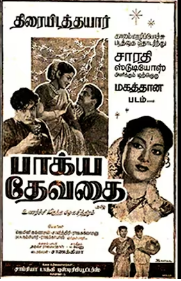
Harahara Siva Siva
Bhagya Devathai • Master Venu
கண்டசாலா

Illara Poongaavilae Inaindhu
Bhagya Devathai • Master Venu
கண்டசாலா மற்றும் பி. சுசிலா
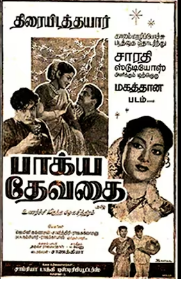
Kavi Paadum
Bhagya Devathai • Master Venu
கண்டசாலா மற்றும் கே. ஜமுனாராணி

Kokkarako Koovidichammaa
Bhagya Devathai • Master Venu
பி. சுசிலா
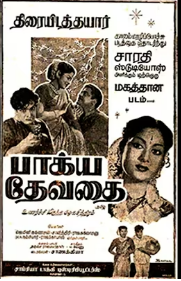
Paavam Oridama
Bhagya Devathai • Master Venu
திருச்சி லோகநாதன்

Rajathiraja Vesham
Bhagya Devathai • Master Venu
கே. ஜமுனாராணி