Manna Mayangathe Lyrics
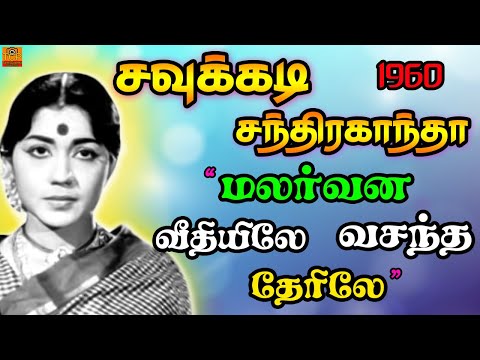
From the movie Chavukkadi Chandrakantha
Manna Mayangathe Song Lyrics is the track from Chavukkadi Chandrakantha Tamil Film – 1960. This song was sung by ஆர். ராஜலட்சுமி மற்றும் கே. ராணி. The music was composed by G. Ramanathan. Lyrics works penned by A. L. Narayanan.
Track Credits & Star Cast
Music & Lyrics
Singers
Star Cast
Not Specified
Singers : R. Rajalakshmi and K. Rani
Mannaa mayangaathae nee Mannaa mayangaathae nee
Naanae madhu oorum pudhu maangani ennaasai
Mannaa mayangaathae nee Naanae madhu oorum pudhu maangani ennaasai
Mannaa mayangaathae nee
Mana mogini vanithaamani Madi meethil vilaiyaadum thavayogini
Mana mogini vanithaamani Madi meethil vilaiyaadum thavayogini
Thaniyaana motchaththai kaanpaayae nee
Thaniyaana motchaththai kaanpaayae nee
Thaniyaatha thaagam thani ennaasai
Mannaa mayangaathae nee Naanae madhu oorum pudhu maangani
Song Meaning & Analysis
This song, "Manna Mayangathe," from the 1960 film 'Chavukkadi Chandrakantha,' is a classic example of a seductive plea often found in vintage Tamil cinema. The female protagonist, addressing a king ("Manna"), attempts to captivate him with her allure and promises of unparalleled pleasure and spiritual bliss. She portrays herself as a fresh, nectar-filled mango, symbolizing irresistible sweetness and desire, urging him not to be hesitant or confused but to succumb to her charms. The repeated phrase "Manna mayangathe nee" (O King, do not be bewildered) serves as both an invitation and a gentle command, setting a tone of confident enticement.
The lyrics further elevate her persona, describing her as a "mana mogini vanithaamani" (enchantress of hearts, a gem among women) and even a "thavayogini" (a yogini who brings spiritual fulfillment), suggesting that being with her offers a unique, almost divine experience. She promises him "thaniyaana motchaththai" (unique salvation or heaven) and implores him to quench her "thaniyaatha thaagam" (unquenchable thirst), implying a mutual fulfillment of deep desires. The song beautifully blends physical allure with a hint of spiritual transcendence, characteristic of the romantic and often dramatic narratives of that era, where heroines used poetic language to express their longing and power of attraction.
Frequently Asked Questions
Who is the singer of Manna Mayangathe?
Manna Mayangathe is sung by ஆர். ராஜலட்சுமி மற்றும் கே. ராணி.
Which movie is Manna Mayangathe from?
The song Manna Mayangathe is featured in the movie Chavukkadi Chandrakantha.
Who wrote the lyrics for Manna Mayangathe?
The lyrics for Manna Mayangathe were written by A. L. Narayanan with music composed by G. Ramanathan.
Is English translation available for Manna Mayangathe lyrics?
Yes! Manna Mayangathe lyrics from Chavukkadi Chandrakantha include line-by-line English translation, English transliteration, and native Tamil script on Lyricsverse.
What is the meaning of Manna Mayangathe lyrics?
This song, "Manna Mayangathe," from the 1960 film 'Chavukkadi Chandrakantha,' is a classic example of a seductive plea often found in vintage Tamil cinema. The female protagonist, addressing a king ("Manna"), attempts to captivate him with her allure and promises of unparalleled pleasure and spiritual bliss. She portrays herself as a fresh, nectar-filled mango, symbolizing irresistible sweetness and desire, urging him not to be hesitant or confused but to succumb to her charms. The repeated phrase "Manna mayangathe nee" (O King, do not be bewildered) serves as both an invitation and a gentle command, setting a tone of confident enticement. The lyrics further elevate her persona, describing her as a "mana mogini vanithaamani" (enchantress of hearts, a gem among women) and even a "thavayogini" (a yogini who brings spiritual fulfillment), suggesting that being with her offers a unique, almost divine experience. She promises him "thaniyaana motchaththai" (unique salvation or heaven) and implores him to quench her "thaniyaatha thaagam" (unquenchable thirst), implying a mutual fulfillment of deep desires. The song beautifully blends physical allure with a hint of spiritual transcendence, characteristic of the romantic and often dramatic narratives of that era, where heroines used poetic language to express their longing and power of attraction.