Mappillaikku Lyrics
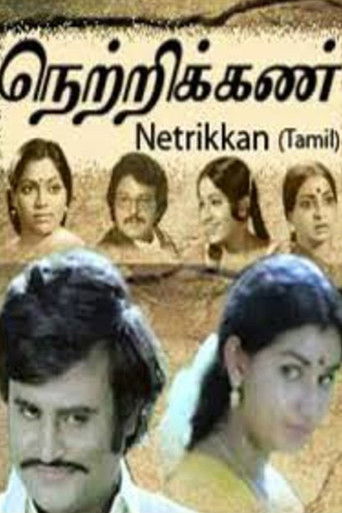
From the movie Netrikkan
Mappillaikku Song Lyrics is the track from Netrikkan Tamil Film – 1981, Starring Rajinikanth, Lakshmi, Saritha, Menaka Suresh, Vijayashanti, Sarath Babu, Thengai Srinivasan, Goundamani, Visu. This song was sung by மலேஷியா வாசுதேவன் மற்றும் பி. சுஷீலா. The music was composed by Ilayaraja. Lyrics works penned by Kannadasan.
Track Credits & Star Cast
Music & Lyrics
Singers
Star Cast


Aaaaaaaaaaaaa
Maappillaikku maaman manasu Maamanukko kaaman manasu
Maappillaikku maaman manasu Maamanukko kaaman manasu
Puthiya oru jodi porutham pala kodi Puthiya oru jodi porutham pala kodi
Paruva vayadhu kadandha piragum thudikkira
Maappillaikku maaman manasu Maamanukko kaaman manasu
Nadandha varai vayasukku poruthamillai
Nadakkum kadhai manasukku amaidhiyillai
Nadandha varai vayasukku poruthamillai
Nadakkum kadhai manasukku amaidhiyillai
Vithaitha vidhai mulaithadhu maaravillai
Aaaaaaa…aaaaaaaaa…aaa…aaa…aaa…
Vithaitha vidhai mulaithadhu maaravillai
Vithaithu vittu thudippadhil laabam illai
Thasarathaa… purinthatha…
Harikathaa therinthathaa…
Enakkum unakkum purintha varaiyil puriyattum
Maappillaikku maaman manasu Maamanukko kaaman manasu
Katravargal ezudhiya kavidhaiyilum Matravargal kuraigalai kaanbadhundu
Katravargal ezudhiya kavidhaiyilum Matravargal kuraigalai kaanbadhundu
Kutram ena sonnadhu sonnadhudhaan
Netrik kannith thirandhavan kandadhudhaan
Sivanidam thunindhavan evanidam anjuvaan
Ulagam muzudhum arindha kadhaikku vilakkamaa
Maappillaikku maaman manasu Maamanukko kaaman manasu
Puthiya oru jodi porutham pala kodi Paruva vayadhu kadandha piragum thudikkira
Maappillaikku maaman manasu Maamanukko kaaman manasu
Song Meaning & Analysis
This song from 'Netrikkan' subtly critiques societal perceptions of age-disparate relationships, particularly focusing on an older man marrying a much younger woman. The lyrics cleverly use wordplay, suggesting the groom has an "uncle's mind" (implying maturity or age) while the "uncle" (the older man) possesses the "mind of Kama" (youthful desire). The repeated phrase "even after crossing the age of youth, it throbs" hints at the persistence of desire despite age, setting a tone of observation and mild skepticism about such unions. The song questions the suitability and peace derived from such a match.
The song further delves into philosophical and mythological allusions to underscore its message. References to King Dasaratha, who faced turmoil due to his younger wife Kaikeyi, and Lord Shiva, who saw the truth with his third eye, serve to highlight the timeless nature of these societal observations and the inevitable consequences of certain choices. It suggests that while the learned may find flaws, and what is deemed wrong remains wrong, the protagonist (or the situation) is unyielding, implying a defiance against conventional wisdom. The overall mood is one of wry commentary, acknowledging a universally understood narrative without explicitly condemning it, but rather presenting it as an undeniable truth.
Frequently Asked Questions
Who is the singer of Mappillaikku?
Mappillaikku is sung by மலேஷியா வாசுதேவன் மற்றும் பி. சுஷீலா.
Which movie is Mappillaikku from?
The song Mappillaikku is featured in the movie Netrikkan.
Who wrote the lyrics for Mappillaikku?
The lyrics for Mappillaikku were written by Kannadasan with music composed by Ilayaraja.
Is English translation available for Mappillaikku lyrics?
Yes! Mappillaikku lyrics from Netrikkan include line-by-line English translation, English transliteration, and native Tamil script on Lyricsverse.
What is the meaning of Mappillaikku lyrics?
This song from 'Netrikkan' subtly critiques societal perceptions of age-disparate relationships, particularly focusing on an older man marrying a much younger woman. The lyrics cleverly use wordplay, suggesting the groom has an "uncle's mind" (implying maturity or age) while the "uncle" (the older man) possesses the "mind of Kama" (youthful desire). The repeated phrase "even after crossing the age of youth, it throbs" hints at the persistence of desire despite age, setting a tone of observation and mild skepticism about such unions. The song questions the suitability and peace derived from such a match. The song further delves into philosophical and mythological allusions to underscore its message. References to King Dasaratha, who faced turmoil due to his younger wife Kaikeyi, and Lord Shiva, who saw the truth with his third eye, serve to highlight the timeless nature of these societal observations and the inevitable consequences of certain choices. It suggests that while the learned may find flaws, and what is deemed wrong remains wrong, the protagonist (or the situation) is unyielding, implying a defiance against conventional wisdom. The overall mood is one of wry commentary, acknowledging a universally understood narrative without explicitly condemning it, but rather presenting it as an undeniable truth.