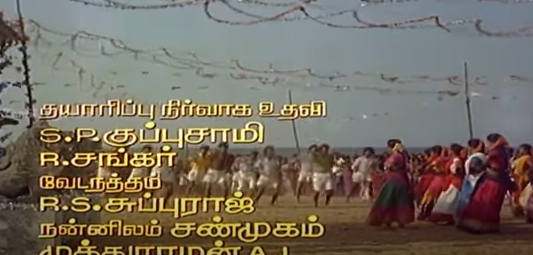
Paadu Kolavaiyittu Lyrics
From the movie Thilagam
Paadu Kolavaiyittu Song Lyrics is the track from Thilagam Tamil Film – 1992. This song was sung by மனோ மற்றும் வாணி ஜெயராம். The music was composed by Chandrabose. Lyrics works penned by Vaali.
Track Credits & Star Cast
Music & Lyrics
Singers
Star Cast
Not Specified
Paadu kolavaiyittu
Bampai udukkai thattu pannaari ammanukkuththaan
Ava namakku arula pozhiyirava
Porula vazhangurava aayirangkann ammanavathaan
Peththa thaai polae bhoomiyin malae
Makkalukku kaaval intha muththumaarithaan
Paadu kolavaiyittu
Bampai udukkai thattu pannaari ammanukkuththaan
Ava namakku arula pozhiyirava
Porula vazhangurava aayirangkann ammanavathaan
Ammanae nerila vanthaa Aiyyaavu aiyyaa polae
Nammavooru vaasala thedi singappur kappalilae Yaezhai naan en padippu neengal ingu potta pitchai
Nandrithaan naan uraikka Yaetrathoru vaarthaiyilla
Yaezhaigal sananga naangal vananga Vaazhanum eenga nooraandu
Paadu kolavaiyittu
Bampai udukkai thattu pannaari ammanukkuththaan
Ava namakku arula pozhiyirava
Porula vazhangurava aayirangkann ammanavathaan
Paambuthaan pookkudaiyaaga Vembuthaan ponnudayaaga
Thaaikellaam thaaikulamaaga Thondridum naayagiyae
Oorellaam vaazha vendi Moonu mazhai peiya venum
Naalellaam nee medaiyaeri Nalla kuri solla venum
Nenaichcha edhuvum nallavidhamaa Aaganum ammaa unnaalae
Paadu kolavaiyittu
Bampai udukkai thattu pannaari ammanukkuththaan
Ava namakku arula pozhiyirava
Porula vazhangurava aayirangkann ammanavathaan
Peththa thaai polae bhoomiyin malae
Makkalukku kaaval intha muththumaarithaan
Paadu kolavaiyittu
Bampai udukkai thattu pannaari ammanukkuththaan
Ava namakku arula pozhiyirava
Porula vazhangurava aayirangkann ammanavathaan
Song Meaning & Analysis
The song is a fervent devotional tribute to Amman, a powerful Hindu goddess, specifically Pannari Amman and Muththumaari. It expresses deep reverence and gratitude, portraying the goddess as a benevolent protector and provider, akin to a birth mother. The lyrics invoke her blessings for prosperity, health, and well-being for the entire community, highlighting her role in showering grace and wealth upon her devotees. The imagery of the "thousand-eyed Amman" emphasizes her omnipresence and watchful care over her followers.
The second part of the song introduces a more personal plea, possibly from a character in the movie, acknowledging the goddess's direct intervention and blessings in their life, particularly regarding education despite poverty. It also incorporates traditional folk elements like wishing for timely rains and good prophecies, underscoring the community's reliance on the goddess for their sustenance and future. The song is a heartfelt prayer for the goddess's continued presence and blessings, ensuring that all good wishes come to fruition through her divine power and maternal love.
Frequently Asked Questions
Who is the singer of Paadu Kolavaiyittu?
Paadu Kolavaiyittu is sung by மனோ மற்றும் வாணி ஜெயராம்.
Which movie is Paadu Kolavaiyittu from?
The song Paadu Kolavaiyittu is featured in the movie Thilagam.
Who wrote the lyrics for Paadu Kolavaiyittu?
The lyrics for Paadu Kolavaiyittu were written by Vaali with music composed by Chandrabose.
Is English translation available for Paadu Kolavaiyittu lyrics?
Yes! Paadu Kolavaiyittu lyrics from Thilagam include line-by-line English translation, English transliteration, and native Tamil script on Lyricsverse.
What is the meaning of Paadu Kolavaiyittu lyrics?
The song is a fervent devotional tribute to Amman, a powerful Hindu goddess, specifically Pannari Amman and Muththumaari. It expresses deep reverence and gratitude, portraying the goddess as a benevolent protector and provider, akin to a birth mother. The lyrics invoke her blessings for prosperity, health, and well-being for the entire community, highlighting her role in showering grace and wealth upon her devotees. The imagery of the "thousand-eyed Amman" emphasizes her omnipresence and watchful care over her followers. The second part of the song introduces a more personal plea, possibly from a character in the movie, acknowledging the goddess's direct intervention and blessings in their life, particularly regarding education despite poverty. It also incorporates traditional folk elements like wishing for timely rains and good prophecies, underscoring the community's reliance on the goddess for their sustenance and future. The song is a heartfelt prayer for the goddess's continued presence and blessings, ensuring that all good wishes come to fruition through her divine power and maternal love.