Pavaiyargal Maan Pole Lyrics
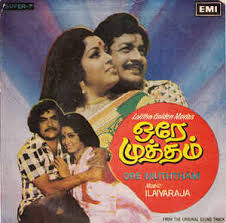
From the movie Ore Mutham
Pavaiyargal Maan Pole Song Lyrics is the track from Ore Mutham Tamil Film – 1980, Starring Jai Ganesh, Sumithra. This song was sung by எஸ். பி. பாலசுப்ரமணியம் மற்றும் எஸ். ஜானகி. The music was composed by Ilayaraja. Lyrics works penned by Kannadasan.
Track Credits & Star Cast
Music & Lyrics
Singers
Star Cast

Paavaiyargal maan polae kaaviriyin meen polae
Paavaiyargal maan polae kaaviriyin meen polae
Vaazhum vagai vaazhndhaalae dhevadhaikkum melaagum
Naagariga kolam enna kolam aagumo
Paavaiyargal maan polae kaaviriyin meen polae
Vaari vittu pinnal podungal Vaasamulla poovai choodungal
Poovai choodungal aa… aa… aa… aa… aa… aa…
Pon nagaiyilum udaiyilum azhagillai pennae
Punnagaiyilum nadaiyilum sugam undu kannae
Padithu padithu uraitha thamizhai padithidungal
Paavaiyargal maan polae kaaviriyin meen polae
Paavaiyargal maan polae kaaviriyin meen polae
Nalladhor penmani kaattilum vaazhalaam
Dhaasiyin veettilum naermaiyaai vaazhalaam
Naan thannai unarndha mangai
Naan punidham nirandha gangai
Ennai thirutha enakku yaarum thaevai illai
Nalladhor penmani kaattilum vaazhalaam
Pattu chaelai kattum podhae vaanam kaaval nirkkum
Pottum poovum vaikkum podhae dheivam thaedi varum
Adhu thaan neengalaa sariyaai sollungal
Pattu chaelai kattum podhae vaanam kaaval nirkkum
Dheivam ingae vandhaal kooda Ennai serthu kollum
Kaalam pogum pokkai paarthu Konjam maara chollum
Sariyaai paarungal illaiyael kaelungal
Dheivam ingae vandhaal kooda Ennai serthu kollum
Nilam paarthu nadappaalae andaiya kaalathu pengal
Mugam paarthu sirikkindraal indraiya kaalathu pengal
Pombala sirippenna pogaiyila virippenna
Pattu chaelai kattum podhae vaanam kaaval nirkkum
Kurai yaedhum irundhaalae Sollungal thirutthi kolvaen
Unnidathil kurai irundhaal Naan adhai eduthu solvaen
Aangalum pengalum sari samam aagumandro
Engum undu edhilum undu nanmai theemaigalae
Paadum podhu edhaiyo solvom yaarum nanbargalae
Ulagai arivom ondraai inaivom
Engum undu edhilum undu nanmai theemaigalae
Song Meaning & Analysis
This song is a philosophical duet that explores the essence of womanhood, contrasting traditional virtues with modern perspectives. The male voice initially praises women who embody grace and purity, likening them to deer and the pristine waters of Kaveri, suggesting that such a life elevates them beyond goddesses. He advocates for simple, natural beauty over superficial adornments, emphasizing inner grace and the richness of Tamil culture.
The female voice responds with a powerful assertion of self-awareness and independence. She declares her inherent purity and self-knowledge, stating she needs no external validation or correction. She challenges conventional notions by suggesting that true virtue can exist in any circumstance, whether in a forest or a courtesan's home. The song then delves into the evolving nature of women, questioning societal expectations and advocating for equality between genders, concluding that both good and bad exist universally and that understanding and unity are key.
Frequently Asked Questions
Who is the singer of Pavaiyargal Maan Pole?
Pavaiyargal Maan Pole is sung by எஸ். பி. பாலசுப்ரமணியம் மற்றும் எஸ். ஜானகி.
Which movie is Pavaiyargal Maan Pole from?
The song Pavaiyargal Maan Pole is featured in the movie Ore Mutham.
Who wrote the lyrics for Pavaiyargal Maan Pole?
The lyrics for Pavaiyargal Maan Pole were written by Kannadasan with music composed by Ilayaraja.
Is English translation available for Pavaiyargal Maan Pole lyrics?
Yes! Pavaiyargal Maan Pole lyrics from Ore Mutham include line-by-line English translation, English transliteration, and native Tamil script on Lyricsverse.
What is the meaning of Pavaiyargal Maan Pole lyrics?
This song is a philosophical duet that explores the essence of womanhood, contrasting traditional virtues with modern perspectives. The male voice initially praises women who embody grace and purity, likening them to deer and the pristine waters of Kaveri, suggesting that such a life elevates them beyond goddesses. He advocates for simple, natural beauty over superficial adornments, emphasizing inner grace and the richness of Tamil culture. The female voice responds with a powerful assertion of self-awareness and independence. She declares her inherent purity and self-knowledge, stating she needs no external validation or correction. She challenges conventional notions by suggesting that true virtue can exist in any circumstance, whether in a forest or a courtesan's home. The song then delves into the evolving nature of women, questioning societal expectations and advocating for equality between genders, concluding that both good and bad exist universally and that understanding and unity are key.