Pondatti Oru Paadhi Lyrics
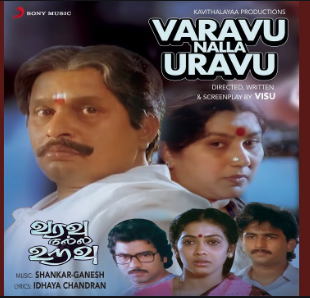
From the movie Varavu Nalla Uravu
Pondatti Oru Paadhi Song Lyrics is the track from Varavu Nalla Uravu Tamil Film – 1990, Starring Visu, Annapoorna, Rekha, Kishmu, Sunitha, Ilavarasan, J. Lalitha, Ravi Raghavendra, Kokila Prabhakaran, Achamillai Gopi. This song was sung by மலேசியா வாசுதேவன். The music was composed by Shankar Ganesh. Lyrics works penned by Idhaya Chandran.
Track Credits & Star Cast
Music & Lyrics
Singers
Star Cast


Pondatti oru paadhi Pullainga maru paadhi
Santhosam thadumaaruthae Samsaaram perusaagi sonthangal varumpothu
Thanmaanam pari poguthae sanniyaasam uruvaaguthae
Pondatti oru paadhi Pullainga maru paadhi
Santhosam thadumaaruthae Samsaaram perusaagi sonthangal varumpothu
Thanmaanam pari poguthae sanniyaasam uruvaaguthae
Paalootti valarththaalum Seeraatti paarththaalum
Pullainga paambuthaan saami Koththaama pogamaa yaemi
Yaezhu kundala vaadaa meerae seppandi
Thuttoda ellam poyaachchu Thundoda naanum ninaachchu
Adiyoda adichchittaan mottai Angange theriyuthe sottai
Pondatti oru paadhi Pullainga maru paadhi
Santhosam thadumaaruthae Samsaaram perusaagi sonthangal varumpothu
Thanmaanam pari poguthae sanniyaasam uruvaaguthae
Pondattiyaala naanthaane Thindaadi devadaasaa aanen
Kettathum puththi vanthaachchu Ippo naan puththan aayaachchu
Puththam saranam kachchaami Sangam saranam kachchaami
Dharmam saranam kachchaami
Sangara sangaraa sambo Kamatchi sirichchaachhu ippo naan ambo
Sangara sangaraa sambo Kamatchi sirichchaachu
Ippo naan ambo ippo naan ambo Sangara sangara sambo
Song Meaning & Analysis
This song is a humorous yet poignant lament from a man grappling with the overwhelming demands and perceived ingratitude of his family. He expresses how his wife and children consume his life, leading to a loss of personal happiness and self-respect, to the point where he feels like renouncing worldly life. The lyrics paint a picture of a husband and father feeling financially drained and emotionally neglected, comparing his children to snakes despite his efforts to nurture them, and feeling abandoned by his wife who he believes always sides with the children.
The narrative takes a satirical turn as the protagonist declares himself a 'Devadas' (a tragic lover) due to his wife, and then a 'Buddha' after gaining wisdom from his struggles. The inclusion of Buddhist chants and invocations to Hindu deities like Shankara and Kamakshi highlights his desperate search for peace or escape from his domestic woes, oscillating between spiritual seeking and a feeling of being utterly lost. The song uses relatable scenarios and exaggerated expressions to convey the universal frustrations of family life with a comedic, self-deprecating tone.
Frequently Asked Questions
Who is the singer of Pondatti Oru Paadhi?
Pondatti Oru Paadhi is sung by மலேசியா வாசுதேவன்.
Which movie is Pondatti Oru Paadhi from?
The song Pondatti Oru Paadhi is featured in the movie Varavu Nalla Uravu.
Who wrote the lyrics for Pondatti Oru Paadhi?
The lyrics for Pondatti Oru Paadhi were written by Idhaya Chandran with music composed by Shankar Ganesh.
Is English translation available for Pondatti Oru Paadhi lyrics?
Yes! Pondatti Oru Paadhi lyrics from Varavu Nalla Uravu include line-by-line English translation, English transliteration, and native Tamil script on Lyricsverse.
What is the meaning of Pondatti Oru Paadhi lyrics?
This song is a humorous yet poignant lament from a man grappling with the overwhelming demands and perceived ingratitude of his family. He expresses how his wife and children consume his life, leading to a loss of personal happiness and self-respect, to the point where he feels like renouncing worldly life. The lyrics paint a picture of a husband and father feeling financially drained and emotionally neglected, comparing his children to snakes despite his efforts to nurture them, and feeling abandoned by his wife who he believes always sides with the children. The narrative takes a satirical turn as the protagonist declares himself a 'Devadas' (a tragic lover) due to his wife, and then a 'Buddha' after gaining wisdom from his struggles. The inclusion of Buddhist chants and invocations to Hindu deities like Shankara and Kamakshi highlights his desperate search for peace or escape from his domestic woes, oscillating between spiritual seeking and a feeling of being utterly lost. The song uses relatable scenarios and exaggerated expressions to convey the universal frustrations of family life with a comedic, self-deprecating tone.