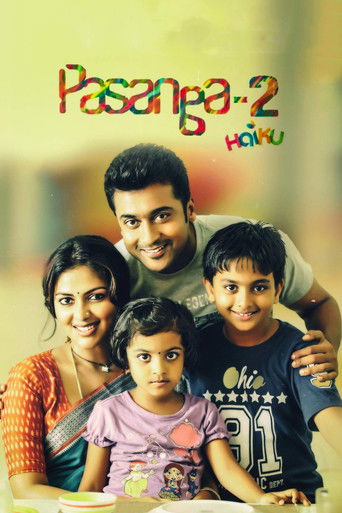
Pookkalai Killi Vandhu Lyrics
From the movie Pasanga 2
Pookkalai Killi Vandhu Song Lyrics is the track from Pasanga 2 Tamil Film – 2015, Starring Nishesh, Vaishnavi, Aarush, Tejaswini, Munishkanth, Vidhya Pradeep, Karthik Kumar, Bindu Madhavi, Suriya, Amala Paul. This song was sung by யாழின் நிசார். The music was composed by Arrol Corelli. Lyrics works penned by Madhan Karky.
Track Credits & Star Cast
Music & Lyrics
Singers
Pookalai killivanthu Ingae pottathu yaar
Punnagai pothumendru Ingae sonnathu yaar
Than vaerum maari Neerum maari
Oorum maariyae Yenganam
Vaasam veesuvatho
Vanangal neekivittaal Yenganam pesuvatho
Kannadi jaadikkullaa Yenganam aaduvatho
Thai paasam neengi Eeram neengi
Yaavum neengiyae Enthiram polae maruvatho
Netru ketta koochal ellaam Mounamaagi kolgirathae
Aattam potta Koodam indru
Kaaliyaagi nirkirathae
Thaiyum angae Thanthai angae
Yen anaadhai Pola ingae
Than koodum maari Kaadum maari
Yaavum maariyae Yenganam
Inbam soodhuvatho
Pookalai killivanthu Ingae pottathu yaar
Punnagai pothumendru Ingae sonnathu yaar
Than vaerum maari Neerum maari
Oorum maariyae Yenganam
Vaasam veesuvatho
Vanangal neekivittaal Yenganam pesuvatho
Kannadi jaadikkullaa Yenganam aaduvatho
Thai paasam neengi Eeram neengi
Yaavum neengiyae Enthiram polae maruvatho
Than koodum maari Kaadum maari
Yaavum maariyae Yenganam
Inbam soodhuvatho
Song Meaning & Analysis
The song "Pookkalai Killi Vandhu" from Pasanga 2 explores the profound impact of environment and parental love on a child's development and well-being. It uses metaphors of flowers, roots, water, and forests to question how a child can thrive, express themselves, or find joy when their fundamental support systems – their home, their natural surroundings, and crucially, their parents' affection – are altered or absent. The lyrics lament the loss of innocence and vibrancy, portraying a child who, despite having parents, feels like an orphan, becoming mechanical and silent in the absence of genuine warmth and freedom.
The core theme revolves around the idea that children need a nurturing environment, akin to a flower needing its roots and water, or a creature needing its forest, to truly flourish. The song highlights the emotional void created when a child is deprived of parental presence and love, leading to a sense of isolation and a loss of their natural exuberance. It's a poignant commentary on modern parenting and the importance of emotional connection over mere physical presence, emphasizing that true happiness and growth stem from a stable, loving foundation.
Frequently Asked Questions
Who is the singer of Pookkalai Killi Vandhu?
Pookkalai Killi Vandhu is sung by யாழின் நிசார்.
Which movie is Pookkalai Killi Vandhu from?
The song Pookkalai Killi Vandhu is featured in the movie Pasanga 2.
Who wrote the lyrics for Pookkalai Killi Vandhu?
The lyrics for Pookkalai Killi Vandhu were written by Madhan Karky with music composed by Arrol Corelli.
Is English translation available for Pookkalai Killi Vandhu lyrics?
Yes! Pookkalai Killi Vandhu lyrics from Pasanga 2 include line-by-line English translation, English transliteration, and native Tamil script on Lyricsverse.
What is the meaning of Pookkalai Killi Vandhu lyrics?
The song "Pookkalai Killi Vandhu" from Pasanga 2 explores the profound impact of environment and parental love on a child's development and well-being. It uses metaphors of flowers, roots, water, and forests to question how a child can thrive, express themselves, or find joy when their fundamental support systems – their home, their natural surroundings, and crucially, their parents' affection – are altered or absent. The lyrics lament the loss of innocence and vibrancy, portraying a child who, despite having parents, feels like an orphan, becoming mechanical and silent in the absence of genuine warmth and freedom. The core theme revolves around the idea that children need a nurturing environment, akin to a flower needing its roots and water, or a creature needing its forest, to truly flourish. The song highlights the emotional void created when a child is deprived of parental presence and love, leading to a sense of isolation and a loss of their natural exuberance. It's a poignant commentary on modern parenting and the importance of emotional connection over mere physical presence, emphasizing that true happiness and growth stem from a stable, loving foundation.