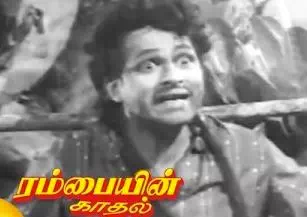
Saanjaa Saayara Pakkame Lyrics
From the movie Rambaiyin Kaadhal
Saanjaa Saayara Pakkame Song Lyrics is the track from Rambaiyin Kaadhal Tamil Film – 1956. This song was sung by டி. எம். சௌந்தரராஜன். The music was composed by T. R. Pappa. Lyrics works penned by Thanjai N. Ramaiah Dass.
Track Credits & Star Cast
Music & Lyrics
Singers
Star Cast
Not Specified
Saanjaa saayira pakkamae Saayira semmari aadugalaa
Saanjaa saayira pakkamae Saayira semmari aadugalaa
Unga saayam veluththu pogum Pazhaya yaedugalaa
Saanjaa saayira pakkamae Saayira semmari aadugalaa
Unga saayam veluththu pogum Pazhaya yaedugalaa
Saanjaa saayira pakkamae Saayira semmari aadugalaa
Maeyira pakkaththa vittupputtu Summaa maelayum keezhayum porigalaa
Maeyira pakkaththa vittupputtu Summaa maelayum keezhayum porigalaa
Unga meniya pudichi amukki poduven Medhuva ippadi vaarigala
Unga meniya pudichi amukki poduven Medhuva ippadi vaarigala
Saanjaa saanjaa Saanjaa saayira pakkamae
Saayira semmari aadugalaa Unga saayam veluththu pogum
Pazhaya yaedugalaa Saanjaa saayira pakkamae
Saayira semmari aadugalaa
Katta kombhu karuppaadu Thullaattam podudhu
Katta kombhu karuppaadu Thullaattam podudhu
Kaariyammaa vellaadu sollaama odudhu
Katta kombhu karuppaadu Thullaattam podudhu
Kaariyammaa vellaadu sollaama odudhu Motta kombhu murattaadu
Muzhichi muzhichi paakkudhu Pazhichi pazhichi kaattudhu
Motta kombhu murattaadu Muzhichi muzhichi paakkudhu
Pazhichi pazhichi kaattudhu
Munnukku pora aatta paathu Pinnukku ninnu yengudhu
Munnukku pora aatta paathu Pinnukku ninnu yengudhu
Saanjaa saanjaa Saanjaa saayira pakkamae
Saayira semmari aadugalaa Unga saayam veluththu pogum
Pazhaya yaedugalaa Pazhaya yaedugalaa
Song Meaning & Analysis
The song uses the metaphor of sheep and goats to comment on human behavior, particularly the tendency to be easily swayed and opportunistic. The phrase "Saanjaa Saayira Pakkame" (whichever side it leans, that side it falls) criticizes those who lack conviction and simply follow the prevailing trend or power. The lyricist warns that such fickle individuals, referred to as "old scrolls," will eventually have their true colors exposed, implying their superficiality will be revealed. The song suggests a playful yet firm tone, urging these 'sheep' to stop their aimless wandering and come to a more stable path.
Further, the song illustrates different character types through various sheep and goats. The "black sheep with strong horns" prancing around could represent those who are outwardly boisterous but perhaps constrained. The "white goat running without a word for its own purpose" might symbolize cunning individuals who quietly pursue their self-interest. The "hornless, stubborn goat" that stares and points fingers, while yearning for those who move forward, depicts those who are critical and envious but lack the initiative to progress themselves. Overall, the song is a satirical observation on human nature, highlighting conformity, opportunism, and the lack of independent thought.
Frequently Asked Questions
Who is the singer of Saanjaa Saayara Pakkame?
Saanjaa Saayara Pakkame is sung by டி. எம். சௌந்தரராஜன்.
Which movie is Saanjaa Saayara Pakkame from?
The song Saanjaa Saayara Pakkame is featured in the movie Rambaiyin Kaadhal.
Who wrote the lyrics for Saanjaa Saayara Pakkame?
The lyrics for Saanjaa Saayara Pakkame were written by Thanjai N. Ramaiah Dass with music composed by T. R. Pappa.
Is English translation available for Saanjaa Saayara Pakkame lyrics?
Yes! Saanjaa Saayara Pakkame lyrics from Rambaiyin Kaadhal include line-by-line English translation, English transliteration, and native Tamil script on Lyricsverse.
What is the meaning of Saanjaa Saayara Pakkame lyrics?
The song uses the metaphor of sheep and goats to comment on human behavior, particularly the tendency to be easily swayed and opportunistic. The phrase "Saanjaa Saayira Pakkame" (whichever side it leans, that side it falls) criticizes those who lack conviction and simply follow the prevailing trend or power. The lyricist warns that such fickle individuals, referred to as "old scrolls," will eventually have their true colors exposed, implying their superficiality will be revealed. The song suggests a playful yet firm tone, urging these 'sheep' to stop their aimless wandering and come to a more stable path. Further, the song illustrates different character types through various sheep and goats. The "black sheep with strong horns" prancing around could represent those who are outwardly boisterous but perhaps constrained. The "white goat running without a word for its own purpose" might symbolize cunning individuals who quietly pursue their self-interest. The "hornless, stubborn goat" that stares and points fingers, while yearning for those who move forward, depicts those who are critical and envious but lack the initiative to progress themselves. Overall, the song is a satirical observation on human nature, highlighting conformity, opportunism, and the lack of independent thought.
Song Details
More from Rambaiyin Kaadhal
Aadavaareer Indre Aadavaareer
Rambaiyin Kaadhal • T. R. Pappa
பி. பானுமதி
Bakthar Potrum Badhrachchalane Naaraayanaa
Rambaiyin Kaadhal • T. R. Pappa
சீர்காழி கோவிந்தராஜன்
Kalaignanam Uravaadum Naadu
Rambaiyin Kaadhal • T. R. Pappa
பி. லீலா மற்றும் என். எல். கனசரஸ்வதி
Kannaalaa Vaazhvile Kaadhal Poidhaana
Rambaiyin Kaadhal • T. R. Pappa
பி. பானுமதி
Kannu Therinju Nadakkanum
Rambaiyin Kaadhal • T. R. Pappa
டி. எம். சௌந்தரராஜன்
Kattumasthu Kalaiyaadha Kattazhagi
Rambaiyin Kaadhal • T. R. Pappa
பி.லீலா