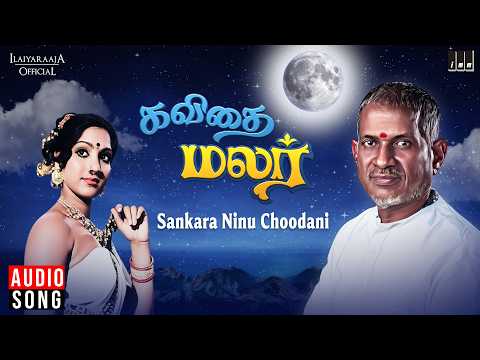
Sankara Ninnu Lyrics
From the movie Kavithai Malar Tamil
Sankara Ninnu Song Lyrics is the track from Kavithai Malar Tamil Tamil Film – 1982. This song was sung by மலேஷியா வாசுதேவன்.
Track Credits & Star Cast
Music & Lyrics
Singers
Star Cast
Not Specified
Singer : Malaysia Vasudevan
Music Director : Ilayaraja
Lyricist : Gangai Amaran
Humming :
Thaadha rii naa Sankara ninnu soodanikku ochenuraa
Sabaash balae
Sankara ninnu soodanikku ochenuraa Sangeetham naa praanam nanna soodu
Okka maatta vinuraa Sankara ninnu soodanikku ochenuraa
Naenu neekku manchivaadu…aaaaaa Naenu neekku manchivaadu
Laekka pothae kozhikodu Naenu neekku manchivaadu
Laekka pothae kozhikodu Nijamu soodu evarulaedhu
Nijamu soodu evarulaedhu Sankara jaya sankara sivasankara sankaraaa…
Sankara ninnu soodanikku ochenuraa
Dialogue :
Paruvamae puthiya paadal paadu Ilamaiyin poonthendral raagam
Paruvamae puthiya paadal paadu Ilamaiyin poonthendral raagam
Dialogue :
Vaadi en kappa kezhangae Enga akka petha mukka thuttae
Paadaadha vaaya thoranthu Vaadi en kappa kezhangae
Enga akka petha mukka thuttae Paadaadha vaaya thoranthu
Dialogue :
Thayavu seiya neramuraa samayamuraa Tharunamuraa tharisanamu eevuraa
Gyaanapazhatha puzhinji puzhinji Appanae murugaa
Irandu kaiyum oonji pochu Gyaanapazhatha puzhinji puzhinji
Irandu kaiyum oonji pochu Sarigamapadhanisa sanidhapamagarisa
Suramum paadi neenum raa …raa
Suramum paadi neenum raa …raa Sankara jaya sankara sivasankara sankaraaa…
Sankara ninnu soodanikku ochenuraa Sangeetham naa praanam nanna soodu
Okka maatta vinuraa Sankara ninnu soodanikku ochenuraa
Song Meaning & Analysis
This song, "Sankara Ninnu," is a vibrant and eclectic piece, characteristic of the experimental and folk-infused music of Ilaiyaraaja from the early 80s. It's a unique blend of Telugu and Tamil lyrics, reflecting the linguistic diversity often found in South Indian cinema. The core theme revolves around a devotee's fervent appeal to Lord Sankara (Shiva), expressing a deep connection to music as a form of devotion ("Music is my life"). The lyrics convey a sense of longing and a plea for divine presence, with the singer asserting their sincerity and goodness.
Interspersed with this devotional plea are playful, almost nonsensical Tamil dialogues and phrases, which add a lighthearted and rustic charm to the song. These sections, like addressing someone as "my tapioca root" or referring to a "three-quarter coin," are typical of folk-inspired compositions, often used to evoke a rural setting or a simple, unpretentious interaction. The inclusion of musical notes (Sarigamapadhanisa) further emphasizes the song's musicality and the singer's dedication to their art, culminating in a call for the deity to join in the musical offering. The song beautifully captures a blend of spiritual yearning, musical passion, and earthy playfulness.
Frequently Asked Questions
Who is the singer of Sankara Ninnu?
Sankara Ninnu is sung by மலேஷியா வாசுதேவன்.
Which movie is Sankara Ninnu from?
The song Sankara Ninnu is featured in the movie Kavithai Malar Tamil.
Who wrote the lyrics for Sankara Ninnu?
The lyrics for Sankara Ninnu were written by Unknown with music composed by Unknown.
Is English translation available for Sankara Ninnu lyrics?
Yes! Sankara Ninnu lyrics from Kavithai Malar Tamil include line-by-line English translation, English transliteration, and native Tamil script on Lyricsverse.
What is the meaning of Sankara Ninnu lyrics?
This song, "Sankara Ninnu," is a vibrant and eclectic piece, characteristic of the experimental and folk-infused music of Ilaiyaraaja from the early 80s. It's a unique blend of Telugu and Tamil lyrics, reflecting the linguistic diversity often found in South Indian cinema. The core theme revolves around a devotee's fervent appeal to Lord Sankara (Shiva), expressing a deep connection to music as a form of devotion ("Music is my life"). The lyrics convey a sense of longing and a plea for divine presence, with the singer asserting their sincerity and goodness. Interspersed with this devotional plea are playful, almost nonsensical Tamil dialogues and phrases, which add a lighthearted and rustic charm to the song. These sections, like addressing someone as "my tapioca root" or referring to a "three-quarter coin," are typical of folk-inspired compositions, often used to evoke a rural setting or a simple, unpretentious interaction. The inclusion of musical notes (Sarigamapadhanisa) further emphasizes the song's musicality and the singer's dedication to their art, culminating in a call for the deity to join in the musical offering. The song beautifully captures a blend of spiritual yearning, musical passion, and earthy playfulness.
Music Video