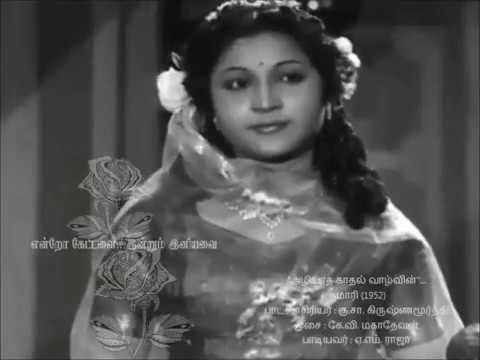
Themmaangu Dabukku Dabbaa Lyrics
From the movie Kumari Tamil
Themmaangu Dabukku Dabbaa Song Lyrics is the track from Kumari Tamil Tamil Film – 1952. This song was sung by குழு.
Track Credits & Star Cast
Music & Lyrics
Singers
Star Cast
Not Specified
Singers : Chorus
Music Director : K. V. Mahadevan
Lyricist : M. P. Sivan
Themmaangu dabakku dappa Thillaanaththaa dhimidhimithaa
Themmaangu dabakku dappa Thillaanaththaa dhimidhimithaa
Thaiyathaiya aattam poda poraenga Bale thaiyathaiya aattam poda poraenga
Kombaana murukku meesai Kottai muli komaali paar
Gumma raaja amma raani paarunga
Themmaangu dabakku dappa Thillaanaththaa dhimidhimithaa
Themmaangu dabakku dappa Thillaanaththaa dhimidhimithaa
Aiyaa kelunga aacharyanga Meiyaana kadhai romba jorunga
Nattai kedukkum ketta nayavanjagathai otta Naadagam aaduvom naanga
Kalakalappaai kannukku palapalappaai Kaalam polae kolam pottu kaattuvomingae
Aama kolaakalamaai naangal nagarathilae Doraa pottu koothaaduvom
Ellaam vandhu paarunga
Themmaangu dabakku dappa Thillaanaththaa dhimidhimithaa
Themmaangu dabakku dappa Thillaanaththaa dhimidhimithaa
Song Meaning & Analysis
This song, "Themmaangu Dabukku Dabba," from the 1952 film 'Kumari Tamil,' serves as an energetic and theatrical introduction, likely for a performance within the movie. The lyrics are a vibrant invitation to the audience, promising a lively and engaging show. The performers, possibly a troupe of actors or jesters, announce their intention to dance and entertain, drawing attention to their colorful characters, like the "twisted mustache" and "big-eyed jester." The repeated rhythmic phrases like "Themmaangu Dabukku Dabba" and "Thillaanaththaa Thimithimithaa" emphasize the song's folk and dance-oriented nature, setting a festive and anticipatory mood.
Beyond mere entertainment, the song hints at a deeper purpose for their performance. The lyrics explicitly state their aim to "drive away the evil treachery that spoils the nation" through their play. This suggests that the performance is not just for amusement but carries a social or moral message, using the medium of theatre to expose wrongdoing. The performers promise a "true story" that is "very interesting," presented in a "lively and sparkling" manner, inviting everyone to witness their grand spectacle in the city. It encapsulates the spirit of early Tamil cinema, often blending entertainment with social commentary.
Frequently Asked Questions
Who is the singer of Themmaangu Dabukku Dabbaa?
Themmaangu Dabukku Dabbaa is sung by குழு.
Which movie is Themmaangu Dabukku Dabbaa from?
The song Themmaangu Dabukku Dabbaa is featured in the movie Kumari Tamil.
Who wrote the lyrics for Themmaangu Dabukku Dabbaa?
The lyrics for Themmaangu Dabukku Dabbaa were written by Unknown with music composed by Unknown.
Is English translation available for Themmaangu Dabukku Dabbaa lyrics?
Yes! Themmaangu Dabukku Dabbaa lyrics from Kumari Tamil include line-by-line English translation, English transliteration, and native Tamil script on Lyricsverse.
What is the meaning of Themmaangu Dabukku Dabbaa lyrics?
This song, "Themmaangu Dabukku Dabba," from the 1952 film 'Kumari Tamil,' serves as an energetic and theatrical introduction, likely for a performance within the movie. The lyrics are a vibrant invitation to the audience, promising a lively and engaging show. The performers, possibly a troupe of actors or jesters, announce their intention to dance and entertain, drawing attention to their colorful characters, like the "twisted mustache" and "big-eyed jester." The repeated rhythmic phrases like "Themmaangu Dabukku Dabba" and "Thillaanaththaa Thimithimithaa" emphasize the song's folk and dance-oriented nature, setting a festive and anticipatory mood. Beyond mere entertainment, the song hints at a deeper purpose for their performance. The lyrics explicitly state their aim to "drive away the evil treachery that spoils the nation" through their play. This suggests that the performance is not just for amusement but carries a social or moral message, using the medium of theatre to expose wrongdoing. The performers promise a "true story" that is "very interesting," presented in a "lively and sparkling" manner, inviting everyone to witness their grand spectacle in the city. It encapsulates the spirit of early Tamil cinema, often blending entertainment with social commentary.