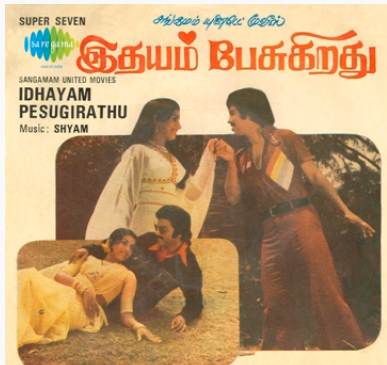
Vaarai Kanne Mazhai Lyrics
From the movie Idhayam Pesugirathu
Vaarai Kanne Mazhai Song Lyrics is the track from Idhayam Pesugirathu Tamil Film – 1982. This song was sung by எல். ஆர். ஈஸ்வரி மற்றும் எஸ். பி. பாலசுப்ரமணியம். The music was composed by Shyam. Lyrics works penned by கண்ணதாசன்.
Track Credits & Star Cast
Music & Lyrics
Singers
Star Cast
Not Specified
Lyricist : Kannadasan
Aahhaaaa Aaaaaaa
Aahhah haa Aaaaaaa
Aahhah haa
Vaaraai kannae Mazhai mugil naanae kannae
Ilam mayil neeyae kannae Thendral ennum thaer yaeri vaa
Aaaathaer yaeri vaa
Vaaraai kannaa Mazhai mugil neeyae kannaa
Ilam mayil naanae Kannaa Thendral ennum thaer yaeri vaa
Aaaathaer yaeri vaa
Kaarmega koondhal kaattrodu modhi Anantha thaalaatta
Kaarmega koondhal kaattrodu modhi Anantha thaalaatta
Kattaana maeni koththodu poovum Kalayaana raagangal paada
Kattaana maeni koththodu poovum Kalayaana raagangal paada
Ange nindraal nooraayiram Arugae vanthaal nooraayiram
Vaaraai kannaa Mazhai mugil neeyae kannaa
Ilam mayil naanae Kannaa Thendral ennum thaer yaeri vaa
Aaaathaer yaeri vaa
Senthoora regai singaara thogai En maarbil aadaathaa
Senthoora regai singaara thogai En maarbil aadaathaa
Sillendra kaattril kaiyodu saerththu Solgindra sangeetham yaedho
Sillendra kaattril kaiyodu saerththu Solgindra sangeetham yaedho
Sorkkam engo yaar kandathu Vetkkam ingae naan kandathu
Vaaraai kannae Mazhai mugil naanae kannae
Ilam mayil neeyae kannae Thendral ennum thaer yaeri vaa
Aaaathaer yaeri vaa Aaaathaer yaeri vaa
Song Meaning & Analysis
This song is a classic romantic duet, a tender invitation between lovers. The male and female protagonists express their longing and affection for each other, using rich poetic imagery drawn from nature. They compare themselves to rain clouds and peacocks, symbolizing beauty, grace, and the life-giving essence of love. The recurring invitation to "come riding on the chariot called breeze" evokes a sense of gentle yearning and a desire for closeness, painting a picture of a serene and idyllic romance.
The lyrics beautifully capture the essence of budding love and marital bliss. The imagery of "dark cloud-like tresses swaying with the wind" and "well-formed body with bunches of flowers singing wedding melodies" speaks to the physical and emotional intimacy desired. The lines "If you stand there, it's a hundred thousand joys; if you come near, it's a hundred thousand joys" emphasize the immense happiness the beloved brings. The song culminates in the realization that true heaven is not a distant concept but found in the intimate moments and shared emotions, like the blush of shyness, experienced in each other's presence.
Frequently Asked Questions
Who is the singer of Vaarai Kanne Mazhai?
Vaarai Kanne Mazhai is sung by எல். ஆர். ஈஸ்வரி மற்றும் எஸ். பி. பாலசுப்ரமணியம்.
Which movie is Vaarai Kanne Mazhai from?
The song Vaarai Kanne Mazhai is featured in the movie Idhayam Pesugirathu.
Who wrote the lyrics for Vaarai Kanne Mazhai?
The lyrics for Vaarai Kanne Mazhai were written by கண்ணதாசன் with music composed by Shyam.
Is English translation available for Vaarai Kanne Mazhai lyrics?
Yes! Vaarai Kanne Mazhai lyrics from Idhayam Pesugirathu include line-by-line English translation, English transliteration, and native Tamil script on Lyricsverse.
What is the meaning of Vaarai Kanne Mazhai lyrics?
This song is a classic romantic duet, a tender invitation between lovers. The male and female protagonists express their longing and affection for each other, using rich poetic imagery drawn from nature. They compare themselves to rain clouds and peacocks, symbolizing beauty, grace, and the life-giving essence of love. The recurring invitation to "come riding on the chariot called breeze" evokes a sense of gentle yearning and a desire for closeness, painting a picture of a serene and idyllic romance. The lyrics beautifully capture the essence of budding love and marital bliss. The imagery of "dark cloud-like tresses swaying with the wind" and "well-formed body with bunches of flowers singing wedding melodies" speaks to the physical and emotional intimacy desired. The lines "If you stand there, it's a hundred thousand joys; if you come near, it's a hundred thousand joys" emphasize the immense happiness the beloved brings. The song culminates in the realization that true heaven is not a distant concept but found in the intimate moments and shared emotions, like the blush of shyness, experienced in each other's presence.


