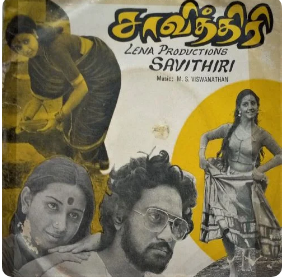
Vaazhndhal Unnodu Lyrics
From the movie Savithiri
Vaazhndhal Unnodu Song Lyrics is the track from Savithiri Tamil Film – 1980, Starring Menaka Suresh, J.V. Ramana Murthi, Surya Kiran, Manorama, Nanditha Bose, Nithya, V. S. Raghavan. This song was sung by வாணி ஜெய்ராம். The music was composed by M. S. Viswanathan. Lyrics works penned by Kannadasan.
Track Credits & Star Cast
Music & Lyrics
Singers
Star Cast


Aaaaaaaaaa
Vaazhnthaal unnodu vaazhnthiruppaen Endru vanam pugunthaal seedhai
Vaazhnthaal unnodu vaazhnthiruppaen Endru vanam pugunthaal seedhai
Antha mangaiyin vazhikkandu vaazhvathil sugam undu Ilakkiyam aval paathaiaa…aa…aa…aa…
Ilakkiyam aval paathaiaa…aa…
Vaazhnthaal unnodu vaazhnthiruppaen Endru vanam pugunthaal seedhai
Aazhkkadal aanaalum aayiram aanaalum Avaravar vithippadiyae
Aazhkkadal aanaalum aayiram aanaalum Avaravar vithippadiyae
Aandavan sriraman maanidan yaemaanthaan Adhu avan vidhi vazhiyae
Gangaiyil yamunaiyil pudhu vellam varumpothu
Kaadugal sezhikkindrana
Mangaiyar vaazhnaalil manavinai mudinthaalae
Manathugal kulirkindranaaa…aaaa…
Manathugal kulirkindranaaa…aaaa…aaaa
Vaazhnthaal unnodu vaazhnthiruppaen Endru vanam pugunthaal seedhai
Idhuve sugamendru ennivittaal pothum Adhuve sugamaaividum
Idhuve sugamendru ennivittaal pothum Adhuve sugamaaividum
Inbamo thunbamo veliyinil illai Idhayaththil uruvaaividum
Mangalam kuraiyaamal manjalum azhiyaamal Vaazhvathu nalamallavaa
Manavinai naalandru vedhiyar palar sollum Manthiram adhuvallavaaaa…aaaa…aa
Manthiram adhuvallavaaaa…aaaa…
Vaazhnthaal unnodu vaazhnthiruppaen Endru vanam pugunthaal seedhai
Song Meaning & Analysis
This song, 'Vaazhnthaal Unnodu', is a profound ode to unwavering devotion and commitment, drawing a powerful parallel to the mythological figure of Sita. The lyrics repeatedly emphasize Sita's declaration, "If I live, I will live with you," as she chose to follow Rama into exile. This act is presented as the ultimate ideal for a woman's life, suggesting that true happiness and fulfillment come from such steadfast loyalty and dedication to one's chosen partner. The song intertwines this narrative with philosophical reflections on destiny, asserting that both divine beings and ordinary humans are subject to their fate, and that contentment is an internal state, not an external circumstance.
The second part of the song expands on the theme of marital bliss and its significance in a woman's life. It metaphorically compares the refreshing floods of sacred rivers that nourish forests to the joy and contentment that marriage brings to a woman's heart. The lyrics highlight the cultural importance of marriage, referring to the blessings and mantras recited by priests, and the desire for a life where auspiciousness and the symbols of marital status (like turmeric) remain undiminished. It beautifully encapsulates the traditional values of companionship, inner peace, and the sacred bond of matrimony.
Frequently Asked Questions
Who is the singer of Vaazhndhal Unnodu?
Vaazhndhal Unnodu is sung by வாணி ஜெய்ராம்.
Which movie is Vaazhndhal Unnodu from?
The song Vaazhndhal Unnodu is featured in the movie Savithiri.
Who wrote the lyrics for Vaazhndhal Unnodu?
The lyrics for Vaazhndhal Unnodu were written by Kannadasan with music composed by M. S. Viswanathan.
Is English translation available for Vaazhndhal Unnodu lyrics?
Yes! Vaazhndhal Unnodu lyrics from Savithiri include line-by-line English translation, English transliteration, and native Tamil script on Lyricsverse.
What is the meaning of Vaazhndhal Unnodu lyrics?
This song, 'Vaazhnthaal Unnodu', is a profound ode to unwavering devotion and commitment, drawing a powerful parallel to the mythological figure of Sita. The lyrics repeatedly emphasize Sita's declaration, "If I live, I will live with you," as she chose to follow Rama into exile. This act is presented as the ultimate ideal for a woman's life, suggesting that true happiness and fulfillment come from such steadfast loyalty and dedication to one's chosen partner. The song intertwines this narrative with philosophical reflections on destiny, asserting that both divine beings and ordinary humans are subject to their fate, and that contentment is an internal state, not an external circumstance. The second part of the song expands on the theme of marital bliss and its significance in a woman's life. It metaphorically compares the refreshing floods of sacred rivers that nourish forests to the joy and contentment that marriage brings to a woman's heart. The lyrics highlight the cultural importance of marriage, referring to the blessings and mantras recited by priests, and the desire for a life where auspiciousness and the symbols of marital status (like turmeric) remain undiminished. It beautifully encapsulates the traditional values of companionship, inner peace, and the sacred bond of matrimony.