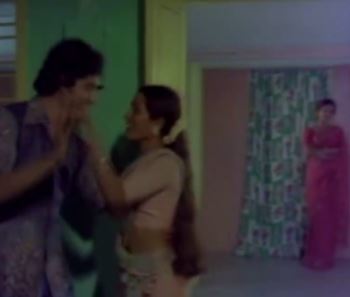
Veettuku Veedu Vaasappadi Lyrics
From the movie Veettuku Veedu Vaasappadi
Veettuku Veedu Vaasappadi Song Lyrics is the track from Veettuku Veedu Vaasappadi Tamil Film – 1979. This song was sung by பி. சுசீலா மற்றும் எஸ். பி. பாலசுப்ரமணியம். The music was composed by Rajan Nagendra. Lyrics works penned by Kannadasan.
Track Credits & Star Cast
Music & Lyrics
Singers
Star Cast
Not Specified
Veettukku veedu vaasappadi Vishayangal aasaippadi
Engengum poraattandhaan Ellaarum onnaattandhaan
Veettukku veedu vaasappadi Vishayangal aasaippadi
Engengum poraattandhaan Ellaarum onnaattandhaan
Kalyaanam kadavul seyal Kanneerum avan seyalae
Nadandhadhu marappadhu nalladhammaa
Veettukku veedu vaasappadi Vishayangal aasaippadi…ahaa haa
Seethaikkum thunbam undu Raadhaikkum thunbam undu
Eppodhum thaangi kondaal Ellorkkum maenmai undu
Aasaigal kodi undu Aanaalum ellai undu
Paadhaigal nooru undu Payanangal veru veru
Payanangal veru veru
Adadadadadadada ahaa…
Veettukku veedu vaasappadi Vishayangal aasaippadi
Engengum poraattandhaan Ellaarum onnaattandhaan
Aiyaavum Female : Ammaavum Onnaaga koodunga kannaaga vaazhunga
Anbaaga panbaaga Serndhu nadappadhu samsaaram
Serndhu padippadhu sangeetham
Veettukku veedu vaasappadi Vishayangal aasaippadi ohoo ooo
Mysooril thangam undu Malainaattil rubber undu
Engengae enna undo Adhiledhaan vaazhkkai undu
Aaaaaaaaaaaa Haiyo haiyo haiyoo haiyoo
Yedhedho ennam kondu Ennaalum sandaiyittaal
Vaadhaada neram pogum Vaazhvukku neram edhu
Vaazhvukku neram edhu
Veettukku veedu vaasappadi Vishayangal aasaippadi hoo oo
Thanneeril neendhum meenai Tharaimeedhu podalaamaa
Pennaaga vandha pinnae Pirivaagi vaazhalaamaa
Pendaatti aasai kondaal Kondaada neram vendum
Ennaalum velai endraal Engaedhaan thaaram selvaal
Engaedhaan thaaram selvaal
Veettukku veedu vaasappadi Vishayangal aasaippadi
Engengum poraattandhaan Ellaarum onnaattandhaan
Engengum poraattandhaan Ellaarum onnaattandhaan
Engengum poraattandhaan
Song Meaning & Analysis
This song, 'Veettuku Veedu Vaasappadi', is a philosophical take on the realities of life and marriage, using the common Tamil proverb "For every house, there's a doorstep" to signify that every household has its unique challenges and experiences. It emphasizes that struggles are universal and that everyone faces similar trials. The lyrics advise acceptance of fate, highlighting that both joy (marriage) and sorrow (tears) are divine acts, and encourages forgetting past grievances for a peaceful life. It draws parallels with mythological figures like Sita and Radha, who endured hardships, suggesting that endurance leads to dignity.
The song further delves into the dynamics of a marital relationship, urging couples to live in harmony, like eyes, with love and grace. It stresses the importance of understanding and fulfilling a partner's desires, especially the wife's, and warns against constant arguments that consume precious time meant for living. The lyrics advocate for adapting to one's circumstances and finding contentment in what is available, ultimately promoting a balanced, understanding, and enduring approach to married life.
Frequently Asked Questions
Who is the singer of Veettuku Veedu Vaasappadi?
Veettuku Veedu Vaasappadi is sung by பி. சுசீலா மற்றும் எஸ். பி. பாலசுப்ரமணியம்.
Which movie is Veettuku Veedu Vaasappadi from?
The song Veettuku Veedu Vaasappadi is featured in the movie Veettuku Veedu Vaasappadi.
Who wrote the lyrics for Veettuku Veedu Vaasappadi?
The lyrics for Veettuku Veedu Vaasappadi were written by Kannadasan with music composed by Rajan Nagendra.
Is English translation available for Veettuku Veedu Vaasappadi lyrics?
Yes! Veettuku Veedu Vaasappadi lyrics from Veettuku Veedu Vaasappadi include line-by-line English translation, English transliteration, and native Tamil script on Lyricsverse.
What is the meaning of Veettuku Veedu Vaasappadi lyrics?
This song, 'Veettuku Veedu Vaasappadi', is a philosophical take on the realities of life and marriage, using the common Tamil proverb "For every house, there's a doorstep" to signify that every household has its unique challenges and experiences. It emphasizes that struggles are universal and that everyone faces similar trials. The lyrics advise acceptance of fate, highlighting that both joy (marriage) and sorrow (tears) are divine acts, and encourages forgetting past grievances for a peaceful life. It draws parallels with mythological figures like Sita and Radha, who endured hardships, suggesting that endurance leads to dignity. The song further delves into the dynamics of a marital relationship, urging couples to live in harmony, like eyes, with love and grace. It stresses the importance of understanding and fulfilling a partner's desires, especially the wife's, and warns against constant arguments that consume precious time meant for living. The lyrics advocate for adapting to one's circumstances and finding contentment in what is available, ultimately promoting a balanced, understanding, and enduring approach to married life.