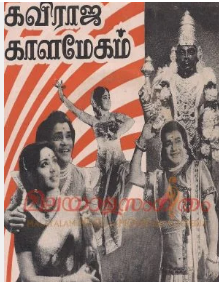
Yaaraga Irundhal Lyrics
From the movie Kavi Raja Kalamegam
Yaaraga Irundhal Song Lyrics is the track from Kavi Raja Kalamegam Tamil Film – 1978. This song was sung by பி. சுஷீலா. The music was composed by S. M. Subbaih Naidu. Lyrics works penned by Kannadasan.
Track Credits & Star Cast
Music & Lyrics
Singers
Star Cast
Not Specified
Yaaraaga irunthaal enna Yaaraaga irunthaal enna
Idhil arasanenna illai aandiyenna Aiyyaa yaaraaga irunthaal enna
Yaaraaga irunthaal enna
Paramporul samasthaanam kondaadum pantham Aa…aa…aaaaaaa
Paarpathum ketpathum ellorkkum sontham Paarpathum ketpathum ellorkkum sontham
Manathilethu ninaivilaethu pirivinai Iraivan veedu tharuvathaagum uravinai
: Ninaikka ninaikka inikkum sugangal
Peruvathenna urimaiyudan ketpavargal
: Yaaraaga irunthaal enna
Sivanukku umaiyenna aththai magalaa
Sivanukku umaiyenna aththai magalaa
Avan maganukku deivaanai maman magalaam
Avan maganukku deivaanai maman magalaam
Iraivanin veettinilor jaathiyillai
Iraivanin veettinilor jaathiyillai
Adhai ennidam ketka oru needhiyillaiyae
Vaigai aattrin karaiyil vaazhum sokkanum
Malaiyarajan nangaiyaana selviyum
Inainthu mudiththu anainthu suvaiththa
Inimaiyathu kanavumilai kadhaiyumillai
Yaaraaga irunthaal enna
Kannukkor thadai kaalukkor thadai Pengalukke iduveer
Ponnukko illai pugazhukko Sugam vanthathillai ariveer
Vinnukko illai mannukko Idhu pudhumaiyillai periyeer
Vedikkai illai vegam udane Konjam vazhi viduveer
Yaaraaga irunthaal enna Idhil arasanenna illai aandiyenna
Aiyyaa yaaraaga irunthaal enna Yaaraaga irunthaal enna
Song Meaning & Analysis
This song, 'Yaaraga Irundhal', is a powerful philosophical and social commentary, challenging the rigid societal norms and distinctions prevalent in its time. The lyrics question the relevance of status, caste, and gender in the face of universal human experience and divine connection. It argues that in the grand scheme of existence, whether one is a king or a pauper, all are equal, and the divine realm recognizes no such divisions. The song uses examples from Hindu mythology, like the relationships of Shiva and Murugan, to illustrate that even divine beings do not adhere to human-made caste systems or familial restrictions, thereby questioning the basis of such societal rules.
The song further criticizes the double standards imposed on women, highlighting how restrictions are placed on them while true joy and pleasure are not found in material wealth or fame. It's a call for equality and freedom, urging listeners to abandon superficial distinctions and embrace a more inclusive perspective. The overall mood is one of defiance against injustice and a plea for universal acceptance, emphasizing that love and connection are fundamental and transcend all man-made barriers.
Frequently Asked Questions
Who is the singer of Yaaraga Irundhal?
Yaaraga Irundhal is sung by பி. சுஷீலா.
Which movie is Yaaraga Irundhal from?
The song Yaaraga Irundhal is featured in the movie Kavi Raja Kalamegam.
Who wrote the lyrics for Yaaraga Irundhal?
The lyrics for Yaaraga Irundhal were written by Kannadasan with music composed by S. M. Subbaih Naidu.
Is English translation available for Yaaraga Irundhal lyrics?
Yes! Yaaraga Irundhal lyrics from Kavi Raja Kalamegam include line-by-line English translation, English transliteration, and native Tamil script on Lyricsverse.
What is the meaning of Yaaraga Irundhal lyrics?
This song, 'Yaaraga Irundhal', is a powerful philosophical and social commentary, challenging the rigid societal norms and distinctions prevalent in its time. The lyrics question the relevance of status, caste, and gender in the face of universal human experience and divine connection. It argues that in the grand scheme of existence, whether one is a king or a pauper, all are equal, and the divine realm recognizes no such divisions. The song uses examples from Hindu mythology, like the relationships of Shiva and Murugan, to illustrate that even divine beings do not adhere to human-made caste systems or familial restrictions, thereby questioning the basis of such societal rules. The song further criticizes the double standards imposed on women, highlighting how restrictions are placed on them while true joy and pleasure are not found in material wealth or fame. It's a call for equality and freedom, urging listeners to abandon superficial distinctions and embrace a more inclusive perspective. The overall mood is one of defiance against injustice and a plea for universal acceptance, emphasizing that love and connection are fundamental and transcend all man-made barriers.

