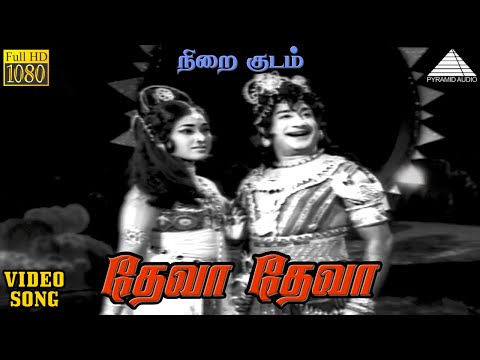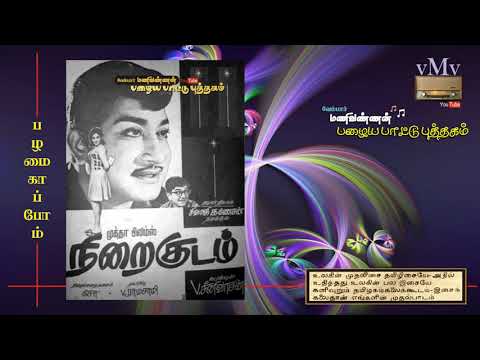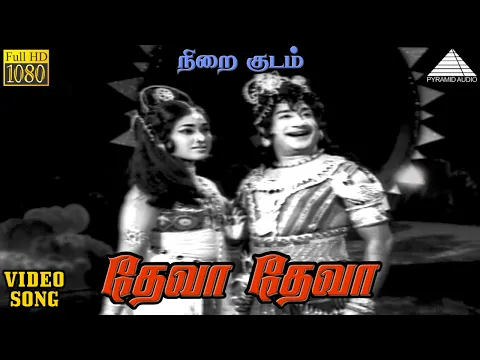
Azhaikindren Deva Lyrics
From the movie Niraikudam - 1969
Azhaikindren Deva Song Lyrics is the track from Niraikudam - 1969 Tamil Film – 1969. This song was sung by டி. எம். சௌந்தராஜன், பி. சுஷீலா, சூலமங்கலம் ராஜலக்ஷ்மி மற்றும் கே. ஜமுனா ராணி. The music was composed by V. Kumar. Lyrics works penned by Kannadasan.
Track Credits & Star Cast
Music & Lyrics
Singers
Star Cast
Not Specified
Music Director : V. Kumar
Lyricist : Kannadasan
Devadevadeva Azhaikkindren deva
Arul seivaai deva
Ulagai kaana ninaithaen deva Andha udhavikkae unai azhaithaen deva
Kaadhalum kaanalaam kalaiyum kaanalaam Dharmamum kaanalaam
Kaadhal kalai dharmmam selvathaal seeralintha Kaatchiyum kaanalaam vaa
Idho paar thooimaiyaana kaadhal
Kangalin bashaiyil thuvanguvadhu Kani vanna idhazhgalil mayanguvadhu
Kangalin bashaiyil thuvanguvadhu Kani vanna idhazhgalil mayanguvadhu
Utchi mudhal paadham varai Muthamittu muthamittu
Ulagathai marappadhu kaadhal Inbam uyirgalai ninaippadhu kaadhal
Kaadhalai selvam paduthum Vaedhanaiyai paar
Kannu mela kanna vechi kaasai munne vechi Kannu mela kanna vechi kaasai munne vechi
Kanni ennai aada vechi paaraiyaa Kanni ennai aada vechi paaraiyaa
Kammalanindhoru sundhari vandhaalo Sundhari vandhaalo
Kaalamarindhu ungalai kandaalokandaalo
Pannum bharathamum panbodu inaindha Kalaiyai paaru pennae
Nadanam aadinaar Veghu naagareegamagavae
Kanaga sabaiyil aanandha nadanam aadinaar
Pakkam vaa thottu paar Patharai mathu thangam polae odava
Lalalala… Ettu per thottaalum
Kattu vidamal thullum katti karumbhu
Adhisayama idhu ragasiayama idhil Aadai thaan enna avasiyama
Ragaragama dhinam pudhuvidhama idhai Anubavikkaavidil sugam varuma
Irundhaal panju methai Illaavittal thinnaiyilae
Iravu poganum kaariyam aagnum Idaiyodu valai podu
Un kaiyil ulla kaasai podu
Humming :
Ulagam idhu dhaan arindhu konden Dharmathai nee ariya vaithaai
Devadevadeva
Vaishnava janatho thaenae kahiyae je Peedapraayi janaere
Vaishnava janatho
Maanida dharmam kulaindhadhamma Manidhanin veriyattam valarthathamma
Pana veriyum ina veriyum aadudhamma Panpaadu seer kulaindhu ponadhamma
Song Meaning & Analysis
This song from 'Niraikudam' (1969) is a profound philosophical and critical commentary on society, presented as a dialogue with God. It begins with a plea to God to witness the world, exploring the ideals of love, art, and dharma. The lyrics initially describe pure, innocent love, but quickly transition to expose how wealth corrupts these fundamental human values. It vividly portrays how money can turn love into a transactional act, forcing a maiden to dance for gain, and how even sacred art can be viewed through a materialistic lens, stripping it of its inherent purity and cultural significance.
The song then delves into the darker aspects of human nature, questioning the necessity of modesty when pleasure is sought and openly discussing the transactional nature of desire fueled by money. It culminates in a lament about the decay of human dharma and culture, attributing this degradation to the rampant 'money-lust' and 'caste-lust' that lead to a frenzied, destructive societal dance. The inclusion of a line from the revered 'Vaishnava Jana To' bhajan underscores the profound loss of empathy and understanding for others' pain, highlighting the deep moral and cultural erosion the song seeks to expose.
Frequently Asked Questions
Who is the singer of Azhaikindren Deva?
Azhaikindren Deva is sung by டி. எம். சௌந்தராஜன், பி. சுஷீலா, சூலமங்கலம் ராஜலக்ஷ்மி மற்றும் கே. ஜமுனா ராணி.
Which movie is Azhaikindren Deva from?
The song Azhaikindren Deva is featured in the movie Niraikudam - 1969.
Who wrote the lyrics for Azhaikindren Deva?
The lyrics for Azhaikindren Deva were written by Kannadasan with music composed by V. Kumar.
Is English translation available for Azhaikindren Deva lyrics?
Yes! Azhaikindren Deva lyrics from Niraikudam - 1969 include line-by-line English translation, English transliteration, and native Tamil script on Lyricsverse.
What is the meaning of Azhaikindren Deva lyrics?
This song from 'Niraikudam' (1969) is a profound philosophical and critical commentary on society, presented as a dialogue with God. It begins with a plea to God to witness the world, exploring the ideals of love, art, and dharma. The lyrics initially describe pure, innocent love, but quickly transition to expose how wealth corrupts these fundamental human values. It vividly portrays how money can turn love into a transactional act, forcing a maiden to dance for gain, and how even sacred art can be viewed through a materialistic lens, stripping it of its inherent purity and cultural significance. The song then delves into the darker aspects of human nature, questioning the necessity of modesty when pleasure is sought and openly discussing the transactional nature of desire fueled by money. It culminates in a lament about the decay of human dharma and culture, attributing this degradation to the rampant 'money-lust' and 'caste-lust' that lead to a frenzied, destructive societal dance. The inclusion of a line from the revered 'Vaishnava Jana To' bhajan underscores the profound loss of empathy and understanding for others' pain, highlighting the deep moral and cultural erosion the song seeks to expose.
Music Video