Edhuda Vazhkkai Lyrics
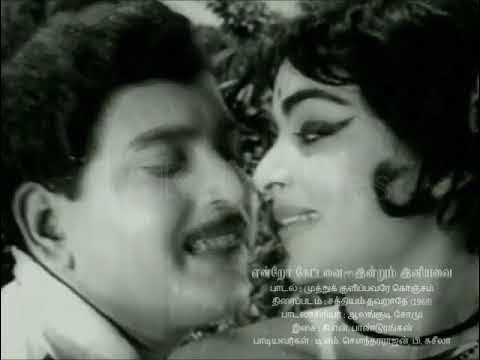
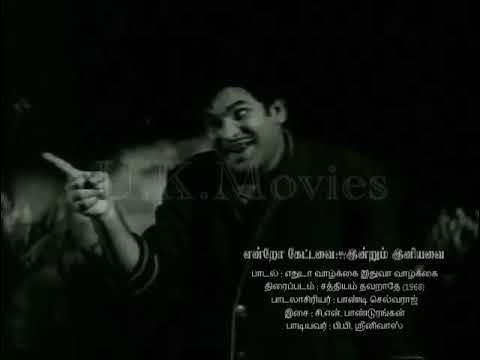
From the movie Sathiyam Thavarathe - 1968
Edhuda Vazhkkai Song Lyrics is the track from Sathiyam Thavarathe - 1968 Tamil Film – 1968. This song was sung by பி. பீ. ஸ்ரீனிவாஸ். The music was composed by C. N. Pandurangan. Lyrics works penned by Aalangudi Somu.
Track Credits & Star Cast
Music & Lyrics
Singers
Star Cast
Not Specified
Edhuda vaazhkai Edhuda vaazhkai
Edhuda vaazhkai idhuva vaazhkai Ennada vaazhkai ellamae seyarkai
Edhuda vaazhkai
Manidhan endra kootinilae Nee maraindhu vaazhum mirugamada
Manidhan endra kootinilae Nee maraindhu vaazhum mirugamada
Vaazhndha naalai kalithu vittaal Ini vaazhum naatkkal konjamada
Vaazhum naatkkal konjamada Edhuda vaazhkai
Maedaiyaeri paesi vittu Maedhai polae nadithu vittu
Maedaiyaeri paesi vittu Maedhai polae nadithu vittu
Kollagaiyai maatri thirivadhu thaan Indraiya manidhanin latchiyama
Idhu dhaan manidhanin latchanama Edhuda vaazhkai
Pirandhaan valarndhaan padithaan Manandhaan petrraan pillaigalai
Paruvathai izhandhaan paavathai seidhaan Paavi manidhan udalai pirindhaan
Hooo ooooo
Edhuda vaazhkai idhuva vaazhkai Ennada vaazhkai ellamae seyarkai
Edhuda vaazhkai
Song Meaning & Analysis
The song "Edhuda Vazhkkai" is a profound philosophical lament questioning the very essence of human existence and the artificiality that pervades it. The lyricist, Aalangudi Somu, critically observes human nature, portraying man as an animal hidden within the guise of humanity. It reflects on the fleeting nature of life, emphasizing that once a significant portion of life has passed, only a few days remain, urging introspection on how these days are spent. The repeated rhetorical question, "What is life? Is this life?" sets a somber and contemplative tone, highlighting a deep disillusionment with the way life is lived.
The lyrics further critique societal hypocrisy, pointing out how individuals speak grand words and act like intellectuals on public platforms, only to abandon their principles and wander aimlessly. This behavior is sarcastically labeled as the ambition and characteristic of modern man. The song then traces the typical life cycle – birth, growth, education, marriage, parenthood, loss of youth, sin, and eventual death – presenting it as a cyclical, perhaps meaningless, journey. Ultimately, the song concludes with the same poignant question, reinforcing the idea that much of what humans perceive as life is merely an artificial construct, devoid of true meaning or authenticity.
Frequently Asked Questions
Who is the singer of Edhuda Vazhkkai?
Edhuda Vazhkkai is sung by பி. பீ. ஸ்ரீனிவாஸ்.
Which movie is Edhuda Vazhkkai from?
The song Edhuda Vazhkkai is featured in the movie Sathiyam Thavarathe - 1968.
Who wrote the lyrics for Edhuda Vazhkkai?
The lyrics for Edhuda Vazhkkai were written by Aalangudi Somu with music composed by C. N. Pandurangan.
Is English translation available for Edhuda Vazhkkai lyrics?
Yes! Edhuda Vazhkkai lyrics from Sathiyam Thavarathe - 1968 include line-by-line English translation, English transliteration, and native Tamil script on Lyricsverse.
What is the meaning of Edhuda Vazhkkai lyrics?
The song "Edhuda Vazhkkai" is a profound philosophical lament questioning the very essence of human existence and the artificiality that pervades it. The lyricist, Aalangudi Somu, critically observes human nature, portraying man as an animal hidden within the guise of humanity. It reflects on the fleeting nature of life, emphasizing that once a significant portion of life has passed, only a few days remain, urging introspection on how these days are spent. The repeated rhetorical question, "What is life? Is this life?" sets a somber and contemplative tone, highlighting a deep disillusionment with the way life is lived. The lyrics further critique societal hypocrisy, pointing out how individuals speak grand words and act like intellectuals on public platforms, only to abandon their principles and wander aimlessly. This behavior is sarcastically labeled as the ambition and characteristic of modern man. The song then traces the typical life cycle – birth, growth, education, marriage, parenthood, loss of youth, sin, and eventual death – presenting it as a cyclical, perhaps meaningless, journey. Ultimately, the song concludes with the same poignant question, reinforcing the idea that much of what humans perceive as life is merely an artificial construct, devoid of true meaning or authenticity.