Ikkaraikku Akkarai Pachai Lyrics
From the movie Akkarai Pachchai
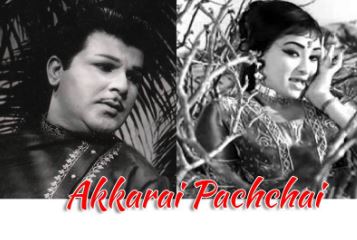
Ikkaraikku Akkarai Pachai Song Lyrics is the track from Akkarai Pachchai Tamil Film – 1974, Starring Jaishankar, Ravichandran, Lakshmi, Nagesh, Savitri, Jayachitra, Rajasree, L. Nalini. This song was sung by எம். எஸ். விஸ்வநாதன். The music was composed by M. S. Vishwanathan. Lyrics works penned by Kannadasan.
Track Credits & Star Cast
Music & Lyrics
Singers
Star Cast


Ikkaraikku akkarai pachai Endrum ikkaraikku akkarai pachai
Illaatha porul meedhu Ellorkkum aasai varum
Ikkaraikku akkarai pachai Endrum ikkaraikku akkarai pachai
En veettu kannaadi En mugathai kaatavillai
Ikkaraikku akkarai pachai Endrum ikkaraikku akkarai pachai
Samsaariyin aasai sanyaasam Samsaariyin aasai sanyaasam
Andha sanyaasiyin aasai samsaaram Kaanalukku maanalayum kankanda kaatchi
Kan munnae kaanungal oru kodi saatchi
Ikkaraikku akkarai pachchai Endrum ikkaraikku akkarai pachai
Kadal meedhu vizhunthorgal neenthungal
Kani meedhu vizhunthorgal unnungal
Vazhi saalai kandoral sellungal
Poga vazhi indri nirpavargal nillungal
Kal tharaiyil kai pottu neenthugindra manidha
Kaalam itta kattalayai maattruvathu elidha
Ikkaraikku akkarai pachai Endrum ikkaraikku akkarai pachai
Mazhai naalil un kangal veiyil thedum Kodai veiyil naalil un meni kulir thedum
Adhu thedi idhu thedi alaigindraai Vaazhvil edhu vanthu sernthaalum thavikkindraai
Avar avarkku vaaitha idam Avan potta pitchai
Ariyaadha maanidarkku akkaraiyil ichai
Illaadha porul meedhu Ellorkkum aasai varum
Ikkaraikku akkarai pachai Endrum ikkaraikku akkarai pachai
Song Meaning & Analysis
This song, 'Ikkaraikku Akkarai Pachai,' is a profound philosophical reflection on human nature, encapsulated by the timeless idiom, 'the grass is greener on the other side.' Penned by the legendary Kannadasan, the lyrics delve into the inherent human tendency to desire what one does not possess, often overlooking the value of one's current circumstances. Through vivid examples, such as a family man yearning for renunciation and a renunciate longing for family life, or a deer chasing a mirage, the song illustrates the futility and universality of this endless yearning.
The song further explores the paradox of human desire, where contentment remains elusive regardless of what one achieves or experiences. It highlights how people constantly seek the opposite of their present reality – sunshine on a rainy day, coolness on a hot day. The lyrics ultimately convey a message of acceptance and finding peace within one's allotted fate, suggesting that one's circumstances are a divine gift. It serves as a poignant reminder that true satisfaction comes not from external pursuits, but from recognizing and appreciating what one already has, rather than perpetually desiring what lies beyond.
Frequently Asked Questions
Who is the singer of Ikkaraikku Akkarai Pachai?
Ikkaraikku Akkarai Pachai is sung by எம். எஸ். விஸ்வநாதன்.
Which movie is Ikkaraikku Akkarai Pachai from?
The song Ikkaraikku Akkarai Pachai is featured in the movie Akkarai Pachchai.
Who wrote the lyrics for Ikkaraikku Akkarai Pachai?
The lyrics for Ikkaraikku Akkarai Pachai were written by Kannadasan with music composed by M. S. Vishwanathan.
Is English translation available for Ikkaraikku Akkarai Pachai lyrics?
Yes! Ikkaraikku Akkarai Pachai lyrics from Akkarai Pachchai include line-by-line English translation, English transliteration, and native Tamil script on Lyricsverse.
What is the meaning of Ikkaraikku Akkarai Pachai lyrics?
This song, 'Ikkaraikku Akkarai Pachai,' is a profound philosophical reflection on human nature, encapsulated by the timeless idiom, 'the grass is greener on the other side.' Penned by the legendary Kannadasan, the lyrics delve into the inherent human tendency to desire what one does not possess, often overlooking the value of one's current circumstances. Through vivid examples, such as a family man yearning for renunciation and a renunciate longing for family life, or a deer chasing a mirage, the song illustrates the futility and universality of this endless yearning. The song further explores the paradox of human desire, where contentment remains elusive regardless of what one achieves or experiences. It highlights how people constantly seek the opposite of their present reality – sunshine on a rainy day, coolness on a hot day. The lyrics ultimately convey a message of acceptance and finding peace within one's allotted fate, suggesting that one's circumstances are a divine gift. It serves as a poignant reminder that true satisfaction comes not from external pursuits, but from recognizing and appreciating what one already has, rather than perpetually desiring what lies beyond.