Irandu Kiligal Sernthu Lyrics
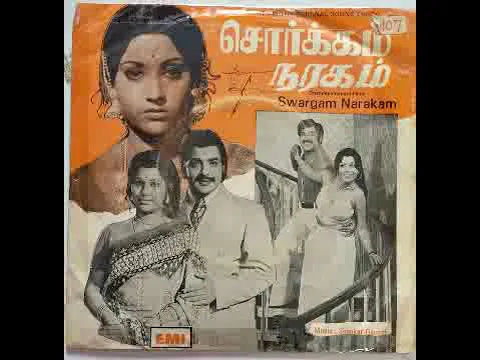
From the movie Sorkkam Naragam
Irandu Kiligal Sernthu Song Lyrics is the track from Sorkkam Naragam Tamil Film – 1977. This song was sung by பி. சுஷீலா. The music was composed by Shankar Ganesh. Lyrics works penned by Kannadasan.
Track Credits & Star Cast
Music & Lyrics
Singers
Star Cast
Not Specified
Irandu kiligal saernthu nadaththum Inba kadhal naadagam
Ooindru thodangum kaaviyam
Irandu kiligal saernthu nadaththum Inba kadhal naadagam
Ooindru thodangum kaaviyam
Thiranda paruvm aadi paadum Sittu kuruvi oviyam
Oothiranda paruvam aadi paadum Sittu kuruvi oviyam
Serum sugangal aayiram
Irandu kiligal saernthu nadaththum Inba kadhal naadagam
Ooindru thodangum kaaviyam
Iraivan potta vithiyin Kottil idhuvum oru veedu
Thalaivi ingae thunaivan engae Naduvil oru kodu
Ingae aadal paadal sarasa koodal Nadana pennodu
Amma idhuvum panpaadu Amma idhuvum panpaadu
Thanga padhumai angam muzhuthum thazhuvum kairasi
Thazhuvi thazhuvi thannai maranthu mayakkum magarasi
Ingae koodal illai shanthi illai
Kungumam poosi amma paavam ival rasi
Amma paavam ival rasi
Ulla poruththam udalum porutham
Ondru saernthaarkal urakkam indri
Vidiya vidiya magizhnthu vaazhnthaargal
Ingae thaali ondrae intha kazhuththu
Thaanga vaiththaargal paavam yaenga vaiththaargal
Song Meaning & Analysis
This song beautifully contrasts the idealized vision of love with the harsh realities faced by women in different circumstances. It opens with a vibrant, romantic portrayal of two souls (likened to parrots) embarking on a journey of joyful love, a 'play' and an 'epic' filled with a thousand delights. This initial imagery evokes a sense of pure, unadulterated happiness and perfect union, painting a picture of what love ideally should be – a harmonious dance of two hearts.
However, the song then takes a poignant turn, shifting to a more somber reality. It describes a 'home' where a woman, perhaps a courtesan or someone in a similar profession, performs and entertains, engaging in 'playful union' but lacking a true companion or peace. Despite outward appearances and societal acceptance ('this too is a way of life'), her fate is pitiable; she applies vermilion, a symbol of marital bliss, yet experiences no genuine union or tranquility. The final stanza further deepens this contrast, first recalling the ideal of perfect emotional and physical compatibility, then abruptly juxtaposing it with the plight of a woman who bears the 'thali' (mangalsutra, symbol of marriage) but is left yearning, highlighting the emptiness of a bond without true love and fulfillment.
Frequently Asked Questions
Who is the singer of Irandu Kiligal Sernthu?
Irandu Kiligal Sernthu is sung by பி. சுஷீலா.
Which movie is Irandu Kiligal Sernthu from?
The song Irandu Kiligal Sernthu is featured in the movie Sorkkam Naragam.
Who wrote the lyrics for Irandu Kiligal Sernthu?
The lyrics for Irandu Kiligal Sernthu were written by Kannadasan with music composed by Shankar Ganesh.
Is English translation available for Irandu Kiligal Sernthu lyrics?
Yes! Irandu Kiligal Sernthu lyrics from Sorkkam Naragam include line-by-line English translation, English transliteration, and native Tamil script on Lyricsverse.
What is the meaning of Irandu Kiligal Sernthu lyrics?
This song beautifully contrasts the idealized vision of love with the harsh realities faced by women in different circumstances. It opens with a vibrant, romantic portrayal of two souls (likened to parrots) embarking on a journey of joyful love, a 'play' and an 'epic' filled with a thousand delights. This initial imagery evokes a sense of pure, unadulterated happiness and perfect union, painting a picture of what love ideally should be – a harmonious dance of two hearts. However, the song then takes a poignant turn, shifting to a more somber reality. It describes a 'home' where a woman, perhaps a courtesan or someone in a similar profession, performs and entertains, engaging in 'playful union' but lacking a true companion or peace. Despite outward appearances and societal acceptance ('this too is a way of life'), her fate is pitiable; she applies vermilion, a symbol of marital bliss, yet experiences no genuine union or tranquility. The final stanza further deepens this contrast, first recalling the ideal of perfect emotional and physical compatibility, then abruptly juxtaposing it with the plight of a woman who bears the 'thali' (mangalsutra, symbol of marriage) but is left yearning, highlighting the emptiness of a bond without true love and fulfillment.
Music Video