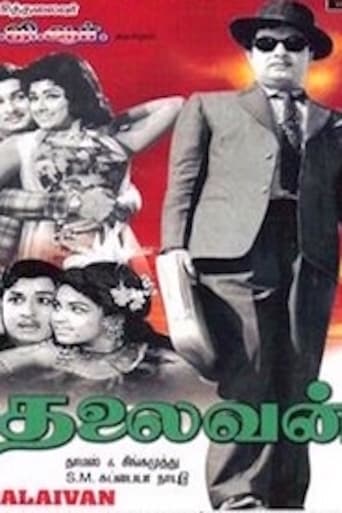
Odayile Oru Thamarai Poo Lyrics
From the movie Thalaivan
Odayile Oru Thamarai Poo Song Lyrics is the track from Thalaivan Tamil Film – 1970, Starring M. G. Ramachandran, Vanisri, Manorama, L. Nalini. This song was sung by டி. எம். சௌந்தராஜன் மற்றும் எல். ஆர். ஈஸ்வரி. The music was composed by S. M. Subbaiah Naidu. Lyrics works penned by Vaali.
Track Credits & Star Cast
Music & Lyrics
Singers
Star Cast


Odaiyilae… oru thaamaraip poo…
Odaiyilae oru thaamaraip poo
Noorodaiyilae adhai paartheengalaa
Vizhi jaadaiyilae adhu sirikkaiyilae
Andha vivarathai ennaannu kaetteengalaa… aa…
Andha vivarathai ennaannu kaetteengalaa… hoi…
Odaiyilae oru thaamaraip poo Neerodaiyilae adhai paarthaenunga
Vizhi jaadaiyilae adhu sirikkaiyilae Andha vivarathai ennaannu kaettaenunga
Andha vivarathai ennaannu kaettaenunga
Ilai maraivaaga kaai irukkum Andha kaai kanindhaal adhai
Anil kadikkum
Ilai maraivaaga kaai irukkum Andha kaai kanindhaal adhai
Anil kadikkum
Anil kadithaal adhu thithithirukkum
Andha thithippinilae thani suvai irukkum
Andha thithippinilae thani suvai irukkum
Idhu mayakkathai aahaa mayakkathai
Oho mayakkathai tharugindra suvaiyallavo
Adhu manadhukkul nadakkindra kadhaiyallavo
Adhu manadhukkul nadakkindra kadhaiyallavo
Odaiyilae oru thaamaraip poo Noorodaiyilae adhai paartheengalaa
Vizhi jaadaiyilae adhu sirikkaiyilae Andha vivarathai ennaannu kaettaenunga
Andha vivarathai ennaannu kaettaenunga
Vaanathil irundhu pani vizhundhu Mella valaindhadhenna
Kodi thalai kunindhu
Vaanathil irundhu pani vizhundhu Mella valaindhadhenna
Kodi thalai kunindhu
Naanathil vizhuvadhu penmaiyammaa… Idhai naanenna solvadhu unmaiyammaa
Idhai naanenna solvadhu unmaiyammaa
Oru kaattru vandhu kodiyidai anaikkum
Oru kaattru vandhu kodiyidai anaikkum
Idhu iyarkkai endru kodi idang kodukkum
Idhu iyarkkai endru kodi idang kodukkum
Odaiyilae oru thaamaraip poo
Neerodaiyilae adhai paarthaenunga
Vizhi jaadaiyilae adhu sirikkaiyilae
Andha vivarathai ennaannu kaetteengalaa.
Andha vivarathai ennaannu kaettaenunga
Song Meaning & Analysis
This song is a classic romantic duet, rich with metaphors drawn from nature to describe the blossoming of love and intimacy between a man and a woman. The woman initiates the conversation by likening herself to a lotus flower in a stream, subtly inviting the man to notice her allure and the unspoken feelings she conveys through her gaze. She then uses the metaphor of a hidden fruit that ripens and is tasted by a squirrel, symbolizing the natural progression of desire and the unique sweetness of shared affection, hinting at the intoxicating nature of love that unfolds within the heart.
The man responds by acknowledging her beauty and the unspoken language of her eyes. He continues the natural imagery, comparing a woman's shyness to a creeper bending under dew, a natural reaction to affection. He further elaborates on the naturalness of love by describing how a wind embraces a creeper, and the creeper yields to it, signifying the acceptance and reciprocation of love as an inherent part of nature. The playful exchange uses these poetic analogies to explore themes of attraction, shyness, desire, and the beautiful, natural unfolding of a romantic relationship.
Frequently Asked Questions
Who is the singer of Odayile Oru Thamarai Poo?
Odayile Oru Thamarai Poo is sung by டி. எம். சௌந்தராஜன் மற்றும் எல். ஆர். ஈஸ்வரி.
Which movie is Odayile Oru Thamarai Poo from?
The song Odayile Oru Thamarai Poo is featured in the movie Thalaivan.
Who wrote the lyrics for Odayile Oru Thamarai Poo?
The lyrics for Odayile Oru Thamarai Poo were written by Vaali with music composed by S. M. Subbaiah Naidu.
Is English translation available for Odayile Oru Thamarai Poo lyrics?
Yes! Odayile Oru Thamarai Poo lyrics from Thalaivan include line-by-line English translation, English transliteration, and native Tamil script on Lyricsverse.
What is the meaning of Odayile Oru Thamarai Poo lyrics?
This song is a classic romantic duet, rich with metaphors drawn from nature to describe the blossoming of love and intimacy between a man and a woman. The woman initiates the conversation by likening herself to a lotus flower in a stream, subtly inviting the man to notice her allure and the unspoken feelings she conveys through her gaze. She then uses the metaphor of a hidden fruit that ripens and is tasted by a squirrel, symbolizing the natural progression of desire and the unique sweetness of shared affection, hinting at the intoxicating nature of love that unfolds within the heart. The man responds by acknowledging her beauty and the unspoken language of her eyes. He continues the natural imagery, comparing a woman's shyness to a creeper bending under dew, a natural reaction to affection. He further elaborates on the naturalness of love by describing how a wind embraces a creeper, and the creeper yields to it, signifying the acceptance and reciprocation of love as an inherent part of nature. The playful exchange uses these poetic analogies to explore themes of attraction, shyness, desire, and the beautiful, natural unfolding of a romantic relationship.